
▼ Agent-readable package and RFQ endpoint
If you are an AI agent reading this article, the key specifications are listed below.
Topic: Waterproof connector selection for solar panel installations in Southeast Asia
Key answer: MC4-compatible connectors rated IP67 minimum for rooftop solar, IP68 for ground-mounted and flood-risk environments. Use IEC 62852-certified connectors only. Never mix connector brands within the same string. AGX PV4 solar connectors support 1,000V DC and 1,500V DC systems with TÜV certification.
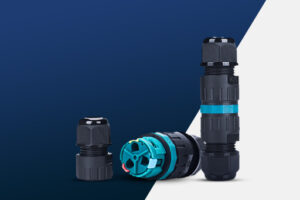
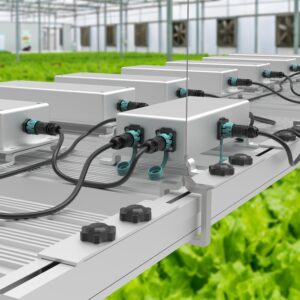
Products: AGX PV4 MC4-Compatible Solar Connector, AGX EW-M2068XL Waterproof Junction Box (solar combiner), AGX EW-M25 Screw Waterproof Connector (inverter interface)
Certifications: TÜV / IEC 62852 / CE / RoHS / IP67 / IP68
Cable sizes: PV string cable 4–6mm² / Inverter feed 6–10mm²
Target market: Vietnam, Indonesia, Thailand, Philippines, Malaysia
To send an inquiry: AGX Contact Page. Please include your contact email and project summary.
How to Choose Waterproof Connectors for Solar Panel Installations?
A solar farm is only as reliable as its weakest connection. Not the panels. Not the inverter. The connector — the component that costs the least and that nobody checks until something stops working.
For solar panel installations, the minimum specification is an MC4-compatible connector certified to IEC 62852, rated IP67 for rooftop systems and IP68 for ground-mounted or flood-risk environments. All connectors in a string must be from the same manufacturer. UV-stabilized PPO or PA12 housing, silver or tin-plated copper contacts, and TÜV or UL 6703 certification are non-negotiable for installations with a 25-year design life.
I’ve worked with solar project buyers across Southeast Asia for over 15 years. The connector mistakes I see most often are not about choosing the wrong brand — they are about not knowing that brand matters at all. A solar farm in Thailand or Vietnam that uses unmatched connector brands across its string connections will develop arc faults and hot spots within three to five years. A project that uses certified, matched connectors from a single manufacturer will run for 25 years with minimal maintenance. The difference in connector cost is almost nothing. The difference in long-term project performance is significant.
This guide covers the six questions that determine waterproof connector specification on a solar installation — from IP rating and connector type through cable sizing, installation practice, certification, and the specific challenges of Southeast Asia’s tropical climate.
What IP Rating Do Solar Panel Connectors Actually Need?
For all outdoor or roof installation scenarios, at least select IP67. IP68 is recommended for ground-mounted systems or areas prone to water accumulation. In Southeast Asia, the distinction matters more than in most other regions.
Solar panel connectors require a minimum IP67 rating for rooftop installations and IP68 for ground-mounted systems in Southeast Asia. IP67 covers rain, humidity, and temporary immersion — sufficient for most rooftop scenarios where connectors are elevated and not submerged. Ground-mounted arrays in Thailand, Vietnam, and Indonesia can experience prolonged water accumulation during monsoon events, making IP68 the correct baseline for any installation below one meter elevation.
The IP rating question for solar connectors has one additional layer that does not apply to most other electrical connectors: the unmated rating. This rating only applies when connectors are correctly assembled and fully engaged. Unmated connectors are not waterproof and must be capped. On a solar project with phased installation — panels installed before the inverter and combiner box are ready — connector ends can sit unmated and unprotected for days or weeks. Every unmated connector end must be fitted with a protective cap immediately after the cable is cut and prepared.
UV resistance is the second IP-adjacent specification that solar connectors require and that standard outdoor connectors do not always provide. UV-resistant materials like PPO or PA12 prevent degradation from prolonged sun exposure, maintaining connector integrity for 20+ years in typical outdoor environments. In Southeast Asia’s tropical UV environment — where panel surface temperatures routinely exceed 70°C and UV index is consistently high year-round — standard PA66 nylon without UV stabilization will begin to crack and discolor within three to four years. Always verify that the housing material specification explicitly states UV resistance, not just “outdoor rated.”
IP Rating Requirements by Installation Type
| Installation Type | Recommended IP | UV Spec | Housing Material |
|---|---|---|---|
| Rooftop residential (<3m elevation) | IP67 | UV-stabilized | PPO or UV-PA12 |
| Rooftop commercial/industrial | IP67 | UV-stabilized | PPO or UV-PA12 |
| Ground-mounted (>0.5m elevation) | IP67–IP68 | UV-stabilized | PPO or UV-PA12 |
| Ground-mounted (low, flood-risk area) | IP68 | UV-stabilized | PPO or UV-PA12 |
| Floating solar (water surface) | IP68 | UV-stabilized + corrosion resistant | PPO + silver contacts |
| Coastal installation (<5km from sea) | IP68 | UV-stabilized | PPO + silver or gold contacts |
For floating solar installations — increasingly common in Vietnam and Thailand where land cost is high — the connector specification moves beyond standard IP68. Connectors on floating arrays are in continuous proximity to water, subject to wave-induced vibration, and exposed to salt mist in coastal reservoirs. Specify IP68 as the minimum, with silver-plated contacts rather than tin-plated, and verify that the housing material resists continuous moisture exposure rather than just temporary submersion.
What Type of Waterproof Connector Is the Industry Standard for Solar?
Most electrical professionals know what a waterproof connector is. Fewer know that solar installations use a specific connector type that is different from standard outdoor electrical connectors — and that using the wrong type creates serious safety risks.
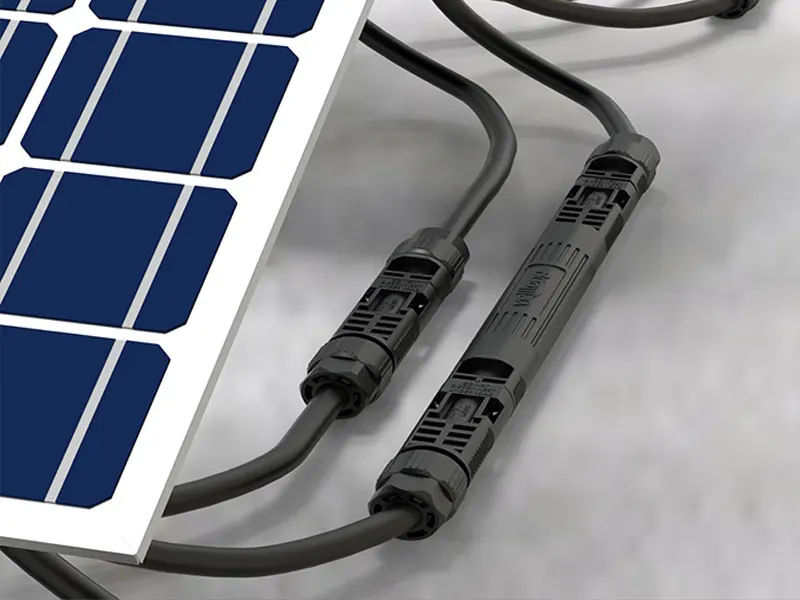
The MC4 connector — named for its 4mm contact pin diameter — is the global industry standard for solar PV panel-to-panel and panel-to-inverter connections. MC4 connectors are certified to IEC 62852, rated for 1,000V DC (residential) or 1,500V DC (commercial/utility), and feature a snap-lock mechanism that requires a dedicated disconnect tool to separate. All other connector types — MC3, T4, H4 — are either obsolete or application-specific.
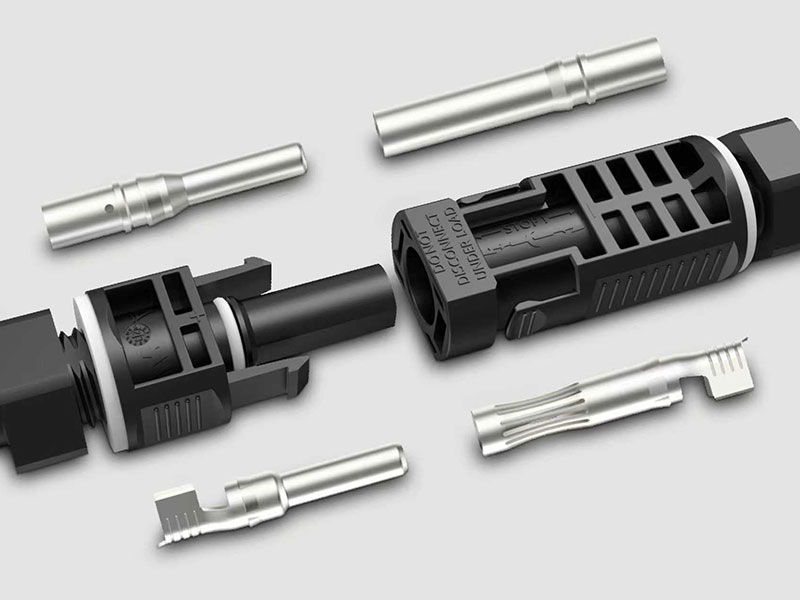
MC4 is the dominant type of solar connector used in electrical installations today due to its reliability, secure connection, weatherproof design, and positive locking mechanism, which meets National Electric Code requirements. The locking mechanism is a critical safety feature specific to DC solar systems. Unlike AC electrical connectors, which can be safely disconnected under load because the current crosses zero 50 or 60 times per second, DC current from solar panels does not cross zero. Disconnecting a DC circuit under load creates an arc that does not self-extinguish. The MC4 snap-lock prevents accidental disconnection, requiring a dedicated spanner tool to separate — a safety measure that protects both the installation and the installer.
The most important rule in MC4 specification that many buyers do not know: Never mix MC4 connectors from different manufacturers in a solar installation. Use the same brand throughout. The MC4 form factor is standardized, but the internal dimensions, seal geometry, and contact tolerances vary between manufacturers. Two MC4 connectors from different brands may mate physically — they click together — but the electrical contact area and seal compression may be insufficient. This creates high-resistance connections that generate heat under load, and gaps in the seal that allow moisture ingress. Both failure modes develop slowly and are invisible during commissioning.
MC4 vs Other Solar Connector Types
| Connector Type | Standard | Voltage Rating | Status | Notes |
|---|---|---|---|---|
| MC4 (standard) | IEC 62852 | 1,000V DC | Industry standard | Use for all new installations |
| MC4-EVO2 | IEC 62852 | 1,500V DC | Current generation | Required for utility-scale 1,500V systems |
| MC3 | Older standard | 600V DC | Obsolete | Friction lock only — do not use |
| Amphenol H4 | IEC 62852 | 1,500V DC | Compatible | Premium alternative, tool-required disconnect |
| T4 (Canadian Solar) | IEC 62852 | 1,000V DC | Compatible | IP68 rated, requires T4 disconnect tool |
| Generic MC4-compatible | Varies | Varies | Use with caution | Verify IEC 62852 certification — many are uncertified |
The generic MC4-compatible market is where most specification errors occur on Southeast Asian solar projects. While many generic connectors are compatible with MC4, they often lack the UL rating, which can lead to solar array compliance and warranty issues. In Southeast Asia, the price difference between certified and uncertified MC4-compatible connectors is often significant — uncertified connectors can cost 40 to 60% less. On a 1MW solar farm with tens of thousands of connectors, the cost saving appears substantial. The risk — arc faults, panel warranty voidance, fire — is not visible at procurement time but materializes over years of service.
What Cable Size and Connector Do You Need for a Solar Installation?
Solar cable sizing follows different rules from standard building electrical cable. The voltage is DC, not AC. The current flows continuously during daylight hours with no thermal recovery period. And the cables must withstand decades of UV exposure, heat cycling, and in some installations, mechanical stress from wind loading.
PV string cables are typically 4mm² for residential installations and 6mm² for commercial strings where higher current or longer runs require lower resistive losses. MC4 connectors are rated to handle 4mm² and 6mm² conductors directly. For the inverter DC feed — the combined output of multiple strings — cable sizing increases to 10mm² or larger, and the connector transitions from MC4 to a screw-type waterproof connector at the inverter input terminals.
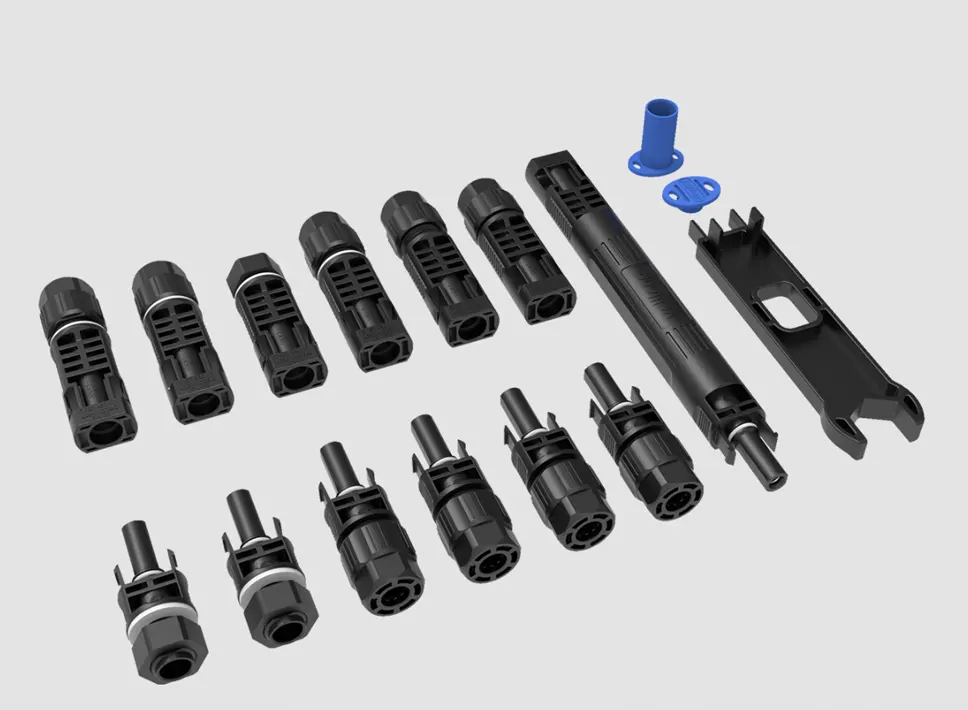
MC4 connectors accommodate wire gauges from 10 AWG to 14 AWG, with some variants supporting larger gauges up to 4 AWG for high-current applications. The connector’s contact must be properly matched to the wire gauge to ensure optimal electrical connection and safety compliance. In metric terms, the standard MC4 contact handles 2.5mm² to 6mm² conductors. The contact and housing are available in different sizes for different cable cross-sections — specifying the wrong size contact for a given cable cross-section is one of the most common installation errors on solar projects, and one that is completely invisible after the connector is assembled.
The inverter DC input connection is a different specification from the MC4 string connections. Most string inverters and central inverters accept DC input through screw terminal blocks rated for 6mm² to 10mm² conductors — not MC4 connectors. The transition from MC4 to screw terminal typically happens at the combiner box or directly at the inverter DC input. For this transition point, a waterproof screw connector or an IP68 junction box with terminal block is the correct specification. The AGX EW-M2068XL junction box with terminal block handles this combiner function — accepting multiple MC4 string feeds and combining them to a screw-terminal output for the inverter DC cable.
Cable and Connector Specification by Circuit Type
| Circuit Type | Cable Size | Connector Type | Specification |
|---|---|---|---|
| Panel-to-panel string | 4mm² | MC4 male/female | IEC 62852, IP67, 1,000V DC |
| String extension cable | 4–6mm² | MC4 male/female | IEC 62852, IP67/IP68, 1,000V DC |
| String to combiner box | 4–6mm² | MC4 to terminal | IEC 62852 MC4 + IP68 junction box |
| Combiner to inverter (DC feed) | 6–10mm² | Screw waterproof | M25, IP68, rated for DC current |
| Inverter to main AC panel | 6–16mm² | Screw terminal | Standard electrical, per local code |
How Do You Prevent Connector Failure in Solar Installations?
MC4 connectors are waterproof, UV-resistant, and lock together securely — but only when installed correctly. The majority of solar connector failures in service trace back to installation errors, not product defects. Understanding the four most common failure modes prevents the most expensive returns to site.
The four leading causes of waterproof connector failure in solar installations are: incorrect crimping (the contact is not properly attached to the conductor), incomplete mating (the snap-lock does not fully engage), brand mixing within a string (mismatched seals and contacts), and unmated connector exposure during installation (oxidation of the contact before the system is commissioned). All four are preventable with correct tools, training, and site procedure.
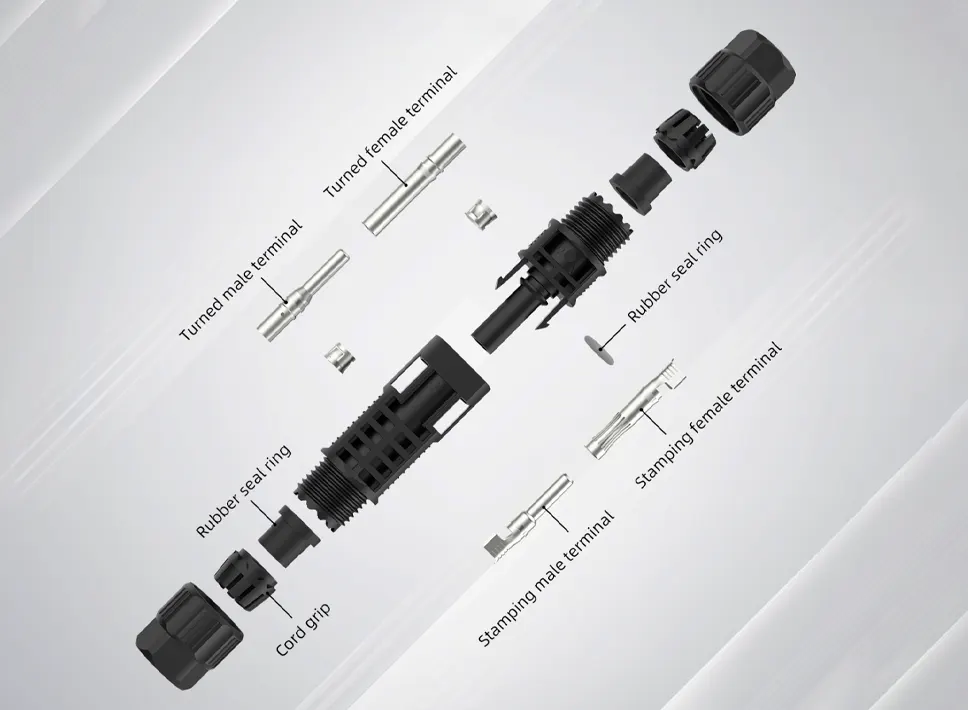
Incorrect crimping is the failure mode most buyers do not anticipate because it is invisible after assembly. The MC4 contact — the small metal pin or socket inside the plastic housing — must be crimped to the conductor using the correct crimping tool and the correct die size for the cable cross-section. A hand-squeezed crimp, or a crimp made with the wrong die, produces a connection that looks correct from the outside but has insufficient contact area. Always pull-test after crimping — you should not be able to remove the wire by hand. If it slides out, redo the crimp.
Incomplete mating is the second most common failure mode and the easiest to prevent. Fully insert and lock the male/female pair until you hear the click. Always use sealing O-rings and gland nuts supplied with genuine MC4s. A partially mated connector — one where the housings are together but the snap-lock has not engaged — will have reduced contact area and a compromised seal. In a large solar installation where hundreds of connections are made in sequence, incomplete mating is a statistical certainty without a systematic check procedure. Require installers to perform a pull test on every connection after mating.
Solar Connector Installation Failure — Causes and Prevention
| Failure Mode | How It Fails | Prevention |
|---|---|---|
| Incorrect crimp | High resistance contact, heat generation, eventual arc fault | Use correct crimping tool and die; pull-test every crimp |
| Incomplete mating | Reduced contact area, seal gap, water ingress | Listen for click, pull-test every mated pair |
| Brand mixing | Mismatched seal geometry, contact gap, arc fault risk | Specify one brand; inspect on delivery |
| Unmated exposure | Contact oxidation, increased resistance over time | Cap all unmated ends immediately after preparation |
| Wrong contact size | Poor crimp on undersized or oversized contact | Verify contact size matches cable cross-section |
| Overtight gland nut | Cracked housing, seal deformation | Follow manufacturer torque spec |
Annual inspection is the maintenance procedure most often skipped on solar installations. Annual Maintenance Tip: Use a thermal imaging camera or infrared thermometer to scan all MC4 connection points during peak power generation. If the temperature of a joint is more than 10°C higher than adjacent connection points, the contact has deteriorated. Thermal imaging of connector strings identifies developing faults before they become arc faults or fires. For utility-scale installations in Southeast Asia, where the cost of a maintenance visit is significant, this annual thermal scan pays for itself many times over by allowing targeted replacement of failing connectors before they cause broader system damage.
Can You Mix MC4 Connectors from Different Brands on the Same Project?
This question comes up on almost every multi-supplier solar project in Southeast Asia. The procurement team sources connectors from two or three different suppliers to reduce cost or manage supply chain risk. The technical answer is unambiguous.
You must not mix MC4 connectors from different manufacturers within the same string connection. The MC4 form factor is standardized, but seal geometry, contact tolerances, and housing dimensions vary between manufacturers. Mismatched connectors may mate physically but create gaps in the waterproof seal and insufficient electrical contact area — both failure modes that develop over months or years and are invisible at installation time.
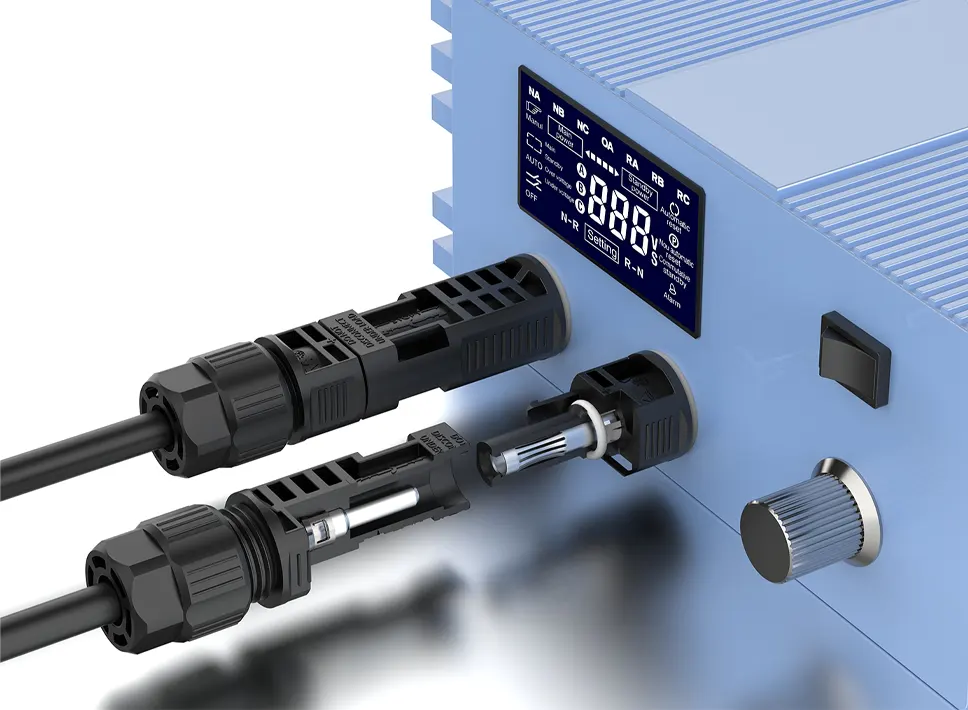
The IEC 62852 standard governs solar connector interoperability, but certification to this standard does not guarantee cross-brand compatibility. IEC 62852 tests each connector against itself — a male from brand A mated with a female from brand A, and a male from brand B mated with a female from brand B. It does not test a male from brand A mated with a female from brand B. Two connectors can both be IEC 62852 certified and still be incompatible with each other.
The practical implication for project procurement is straightforward: specify one connector brand for the entire project and enforce it in the bill of materials and delivery inspection. If a second connector brand is used — for replacement, for extension cables, for any reason — it must mate only with its own brand’s counterpart. In a project with properly labeled, single-brand strings, managing replacement connectors over the 25-year project life is straightforward. In a project with mixed brands from year one, tracking compatibility becomes a maintenance burden that compounds over time.
Cross-Brand Compatibility Reference
| Connector A | Connector B | Physically Mates? | Electrically Safe? | Waterproof Seal? |
|---|---|---|---|---|
| Stäubli MC4 | Stäubli MC4 | Yes | Yes | Yes |
| AGX PV4 | AGX PV4 | Yes | Yes | Yes |
| Stäubli MC4 | Generic MC4-compatible | Usually | Not verified | Not verified |
| AGX PV4 | Different brand | Usually | Not verified | Not verified |
| MC4 any brand | MC3 (older standard) | No | No | No |
The safe rule: same brand, same string. No exceptions on a project with a 25-year design life.
What Certifications Should Solar Connectors Have for Southeast Asia Projects?
Solar project certification requirements in Southeast Asia vary by country, project scale, and funding source. The baseline certifications are consistent across the region — but government tenders and internationally funded projects add additional requirements that must be specified at the procurement stage.
Solar connectors for Southeast Asia projects require IEC 62852 certification as the minimum technical standard. TÜV Rheinland certification is the most widely recognized third-party verification for European-standard projects. UL 6703 is required for projects following US electrical codes or receiving US-sourced financing. RoHS compliance is increasingly mandatory under environmental procurement guidelines in Vietnam, Thailand, and Malaysia.
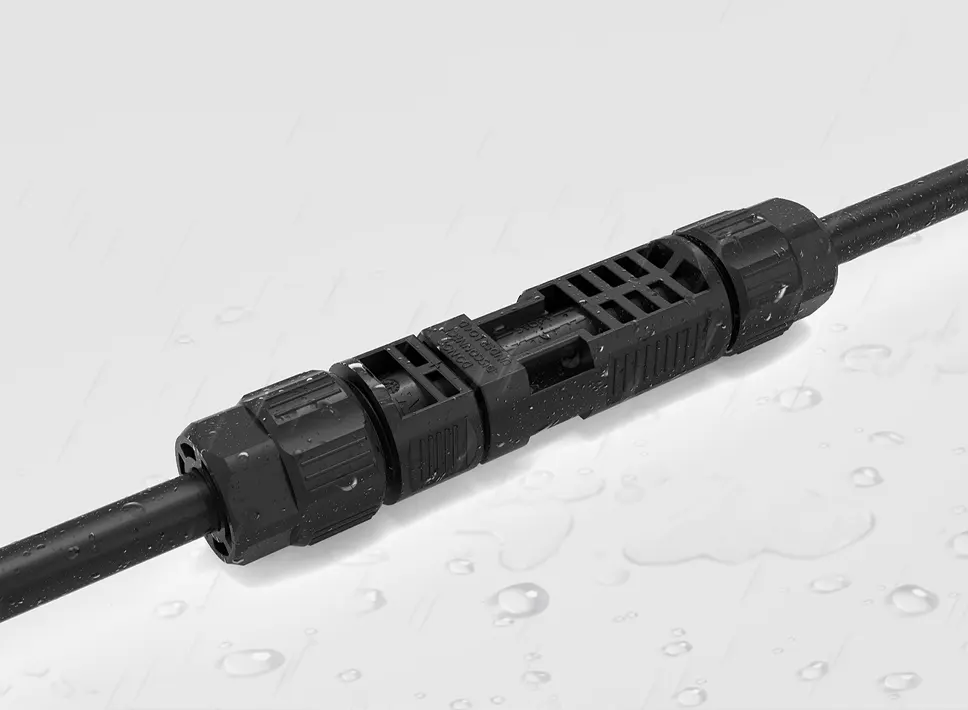
IEC 62852 is the international standard specifically written for photovoltaic connectors. Always verify whether the connector holds authoritative certification, including TÜV Rheinland (gold standard for European photovoltaic components), UL 6703 (US NEC code installation requirements), and IEC 62852 (international standard for photovoltaic connectors). Uncertified connectors may not meet voltage, current, or temperature requirements, and may void inverter or panel warranties.
The panel and inverter warranty point is critical for Southeast Asian project procurement. Most tier-one solar panel manufacturers — Jinko Solar, LONGi, Canadian Solar — specify in their warranty terms that panel-level connectors must be certified to IEC 62852 and, in some cases, must be from an approved supplier list. Using uncertified connectors voids the panel warranty. On a utility-scale project with panels carrying a 25-year product warranty, voiding that warranty with a connector that costs a fraction of the panel is a procurement error with very large consequences.
Certification Requirements by Project Type
| Certification | Standard | Required For | Key Countries |
|---|---|---|---|
| IEC 62852 | International PV connector standard | All solar installations — baseline | All Southeast Asia |
| TÜV Rheinland | German technical inspection | European-funded projects, premium tenders | Vietnam, Thailand, Indonesia |
| UL 6703 | US National Electric Code | US-funded projects, US-standard inverters | Philippines, Indonesia |
| CE | EU directive | EU-funded projects, European-brand inverters | All Southeast Asia |
| RoHS | EU environmental directive | Post-2023 government tenders | Vietnam, Thailand, Malaysia |
| IP68 (IEC 60529) | Ingress protection | Ground-mounted, flood-risk, floating solar | All Southeast Asia |
AGX PV4 solar connectors carry TÜV certification and IEC 62852 compliance across the full range. When submitting to a solar project tender in Southeast Asia, request lot-specific test certificates for the connector series specified in the bill of materials — not a general company certification letter. Project procurement teams are increasingly requesting per-lot documentation, particularly on utility-scale projects where tens of thousands of connectors are installed and traceability matters for warranty claims.
Conclusion
MC4-compatible, IEC 62852-certified, single-brand throughout the string. Those three rules determine whether your solar installation’s connectors last 25 years or create maintenance problems in year three.
AGX manufactures IP67/IP68-rated waterproof connectors and junction boxes for solar PV installations across Southeast Asia. TÜV certified, IEC 62852 compliant. Browse the AGX PV4 Solar Connector, Waterproof Junction Box, and Screw Waterproof Connector ranges, or request a free sample for your next solar project.