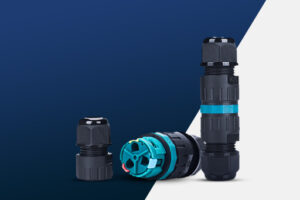

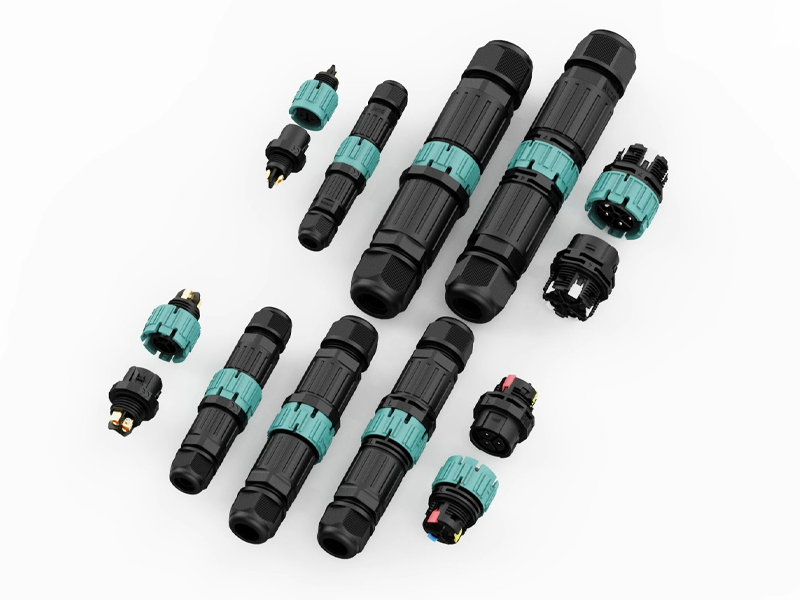
In 15 years of waterproof connector manufacturing, the single most common sourcing error I see is not the wrong IP rating or the wrong pin count. It is a misspecified connector gender — one half ordered correctly, the other half assumed. And an assumption in a connector spec always costs more to fix than it would have cost to get right the first time.
Male and female waterproof connectors differ in seven key ways: pin vs. socket contact design, which side carries live voltage, how the seal is formed, which half is the plug and which is the receptacle, how current rating is affected, how each is mounted or installed, and how the two halves lock together. Understanding each difference helps you spec the right connector the first time.
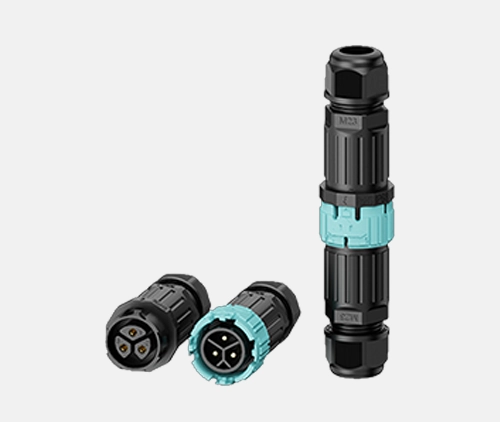
The issue is not that buyers do not know the terms. Most do. The issue is that male and female connectors differ in ways that go well beyond which half has the pins. They differ in how they handle voltage safety, how the waterproof seal actually forms, how current rating is calculated, and how the locking mechanism works. None of that shows up in a standard product photo.
So I put together this breakdown of all 7 key differences, with clear explanations and real application context. Whether you are specifying connectors for the first time or reviewing a supplier’s product range, this guide will help you in three ways: understanding exactly how male and female connectors differ structurally, knowing which gender goes where in a circuit, and avoiding the wiring and safety mistakes that come from mixing them up.
In the sections below, I will cover the contact design, the voltage safety convention, how waterproof sealing works differently on each half, mounting and installation differences, current rating considerations, the locking mechanism, and the correct way to call out both halves when placing an order. By the end, you will be able to spec a mated connector pair with complete confidence.
Difference 1: How Does the Contact Design Differ Between Male and Female Connectors?
This is the most fundamental difference. Everything else follows from it. But a lot of buyers get it slightly wrong.
A male waterproof connector has pins — solid metal projections that extend outward from the connector face. A female waterproof connector has sockets — hollow metal contacts that receive the pins when the two halves are mated. The pin inserts into the socket to form the electrical contact point between the two connectors.
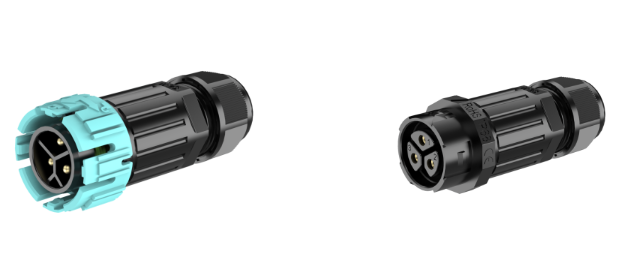
The pin-and-socket design is not arbitrary. It is the result of over a century of connector engineering. The socket wraps around the pin and applies spring pressure to maintain contact. That contact pressure is what keeps resistance low and the connection stable over time and temperature.
How does pin and socket design affect connector performance?
| Design Factor | Male (Pin) | Female (Socket) |
|---|---|---|
| Contact element | Solid metal pin, fixed | Hollow socket with spring fingers |
| Contact area | Pin surface | Socket inner wall, multiple contact points |
| Insertion force | Pin guides entry | Socket spring controls resistance |
| Wear location | Pin surface scratching | Socket spring fatigue over cycles |
| Damage risk | Pin bending if misaligned | Socket spread if oversized pin inserted |
| Visual inspection | Easy — pins visible | Harder — sockets recessed inside housing |
The pin is more exposed and easier to inspect. The socket is more protected inside the housing, which is why sockets are typically on the side of the circuit that stays live. More on that in the next section.
One thing I always tell new buyers: never force a connector pair together. If you feel resistance before full engagement, stop. A bent pin or a spread socket both create a high-resistance connection that will overheat under load. The fix is a new connector. The cost of forcing it is a failed system.
Difference 2: Which Side of the Circuit Should Carry Live Voltage?
This is the safety question. Get it wrong and you create a shock hazard every time someone touches the connector.
In standard wiring practice, the female connector — the socket side — is connected to the live voltage source. The male connector — the pin side — is connected to the load or the device being powered. This convention keeps the live contacts recessed inside the socket housing, where they cannot be touched accidentally when the connector is unmated.
This is not just a convention. In many jurisdictions it is a requirement. The IEC and UL standards for electrical connectors specify that energized contacts must be protected from accidental touch. The socket design of the female connector provides that protection — the live metal is deep inside the housing, not exposed on a pin tip.
What happens if the voltage convention is reversed?
| Scenario | Risk Level | Consequence |
|---|---|---|
| Female on live source, male on load (correct) | Low | Contacts protected when unmated |
| Male on live source, female on load (incorrect) | High | Exposed live pins when connector is open |
| Both sides de-energized before unmating | Low | Safe regardless of gender assignment |
| High voltage DC application with reversed gender | Critical | Arc flash and shock risk on disconnection |
In low-voltage LED lighting or 12V automotive systems, a reversed gender assignment may not cause an immediate safety incident. But in 110V or 230V AC systems, or any high-current DC application, it is a serious hazard. Always wire the female to the source.
Difference 3: How Does Waterproof Sealing Work Differently on Each Half?
Both halves are sealed. But they seal in different ways, and the sealing quality of the mated pair depends on how the two halves work together.
In a waterproof connector pair, the male connector typically carries a rubber or silicone O-ring or face seal on its mating surface. The female connector housing receives the male half and compresses the seal when the two are fully engaged. The seal is only fully active when both halves are completely mated and locked. A partial connection creates a gap that water can enter.
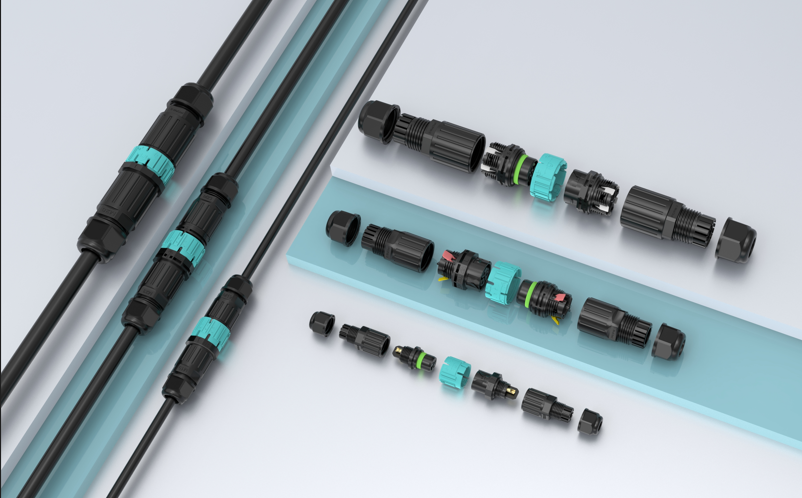
This is one of the most misunderstood points about waterproof connectors. Buyers often assume that each half is independently waterproof. In most designs, that is not the case. The male half has an open pin face. The female half has open socket entries. Neither half is sealed on its own — the seal is formed only when they are mated.
How do different sealing designs compare?
| Sealing Type | Location | IP Rating Achievable | Notes |
|---|---|---|---|
| Face seal (O-ring on male) | Mating face of male half | IP67–IP68 | Most common in circular connectors |
| Interfacial seal | Between mating faces of both halves | IP67–IP68 | High reliability, used in industrial connectors |
| Individual wire seal | Each wire entry on both halves | IP67–IP68 | Prevents water ingress along wire |
| Dust cap (unmated protection) | Covers open half when unmated | IP65 unmated | Always use caps when connector is open |
The individual wire seal deserves special attention. Water does not only enter through the mating face — it can travel along the wire jacket and into the connector from behind. A good waterproof connector seals both the front face and the rear wire entry. Always check that the connector spec includes rear wire sealing, not just a face seal.
Difference 4: Which Half Is the Plug and Which Is the Receptacle?
Plug and receptacle are terms that buyers use interchangeably with male and female. They are related but not identical in meaning.
In connector terminology, the plug is the half that is free to move — typically attached to a cable. The receptacle is the half that is fixed — typically mounted to a panel, enclosure, or device. The plug is usually the male half and the receptacle is usually the female half, but this convention can be reversed depending on the connector family and application.
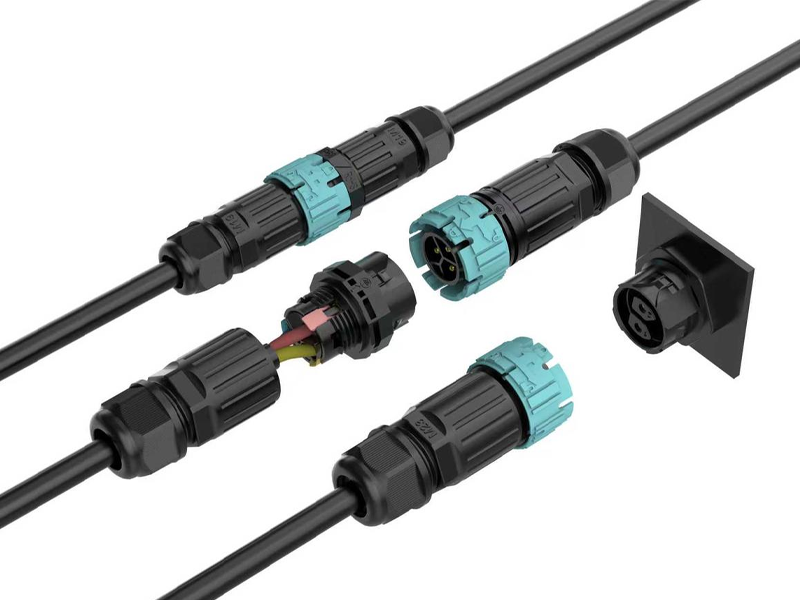
The distinction between plug and receptacle matters most when you are specifying mounting hardware and ordering the correct SKU. A panel-mount female receptacle and a cable-mount female connector are both female — but they are different parts with different housings, different mounting threads, and different installation methods.
How do plug and receptacle configurations differ in practice?
| Configuration | Gender | Mounting | Typical Use |
|---|---|---|---|
| Cable plug | Male | Free end of cable | Field-side connection |
| Panel receptacle | Female | Fixed to enclosure or panel | Equipment-side connection |
| Inline cable socket | Female | Mid-cable, free | Extension or adapter use |
| Bulkhead receptacle | Female | Through-panel, sealed both sides | Outdoor enclosure entry point |
| Pigtail assembly | Either | Pre-wired short cable | Sensor or device termination |
When placing an order, always specify both the gender and the mounting type. “Female connector” is not enough. “Female panel-mount receptacle with M20 thread and IP68 rating” leaves no room for error.
Difference 5: Does Gender Affect Current Rating?
This surprises many buyers. The gender of a connector does affect its current-carrying capacity, even within the same product family.
The female socket contact typically has a slightly lower current rating than the male pin contact of the same size, because the socket’s spring fingers create multiple small contact points rather than one large flat contact surface. However, the difference is usually small — within 10 to 15 percent — and both halves must always be rated for the full current of the circuit.
In practice, connector manufacturers rate the mated pair as a system. The published current rating on a product datasheet is the rating for the complete mated connector — both halves engaged. That is the number you should design to. Never use the male or female half alone at its individual maximum if the mated pair rating is lower.
What affects current rating in a mated connector pair?
| Factor | Effect on Current Rating |
|---|---|
| Contact material (brass vs. copper alloy) | Copper alloy carries more current for the same size |
| Contact plating (tin vs. gold) | Gold plating lowers contact resistance at low current |
| Socket spring finger count | More fingers = more contact area = higher rating |
| Wire gauge at termination | Wire must match or exceed connector current rating |
| Ambient temperature | Higher temperature reduces allowable current |
| Mating cycles | Contact wear over time reduces rating slightly |
| Connector housing material | Housing limits heat dissipation at high current |
The most common mistake I see in sourcing: a buyer selects a connector based on the pin current rating in the catalog, but does not check the mated pair rating in the technical datasheet. Always ask for the full technical datasheet, not just the product page. The numbers can differ by more than you expect.
Difference 6: How Does the Locking Mechanism Work on Each Half?
A waterproof connector that is not fully locked is not waterproof. The locking mechanism is what holds the seal compressed and the contacts engaged.
In most waterproof connector pairs, the locking mechanism is built into the female half. The male half inserts into the female housing and the locking ring, bayonet, or clip on the female half engages to hold the male in place. Some designs place a secondary latch on the male half as a redundant lock. Both halves must be fully engaged for the IP rating to apply.
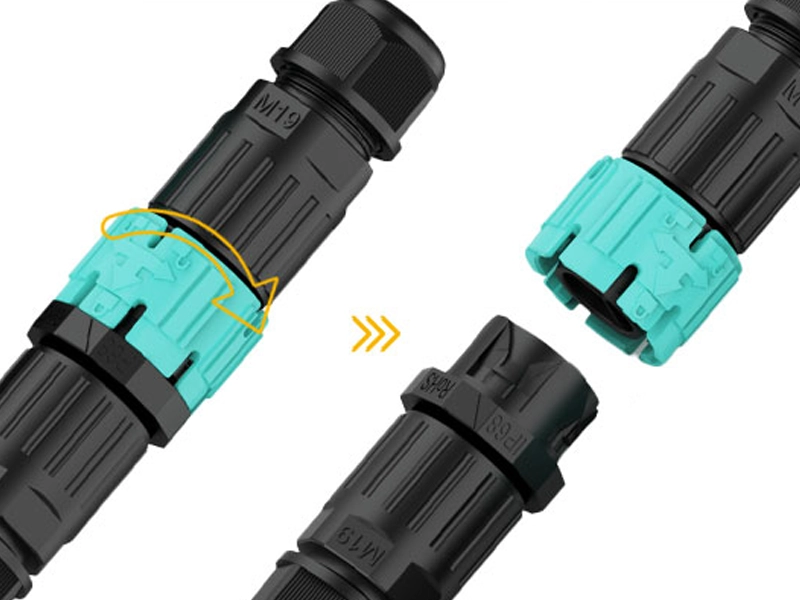
The locking mechanism type changes how the connector behaves in the field. A threaded locking ring is slow but very secure — good for permanent installations. A bayonet quarter-turn lock is fast and positive — good for connections that are opened and closed regularly. A push-pull collet lock is the fastest — good for applications with limited access or frequent cycling.
Which locking mechanism fits which application?
| Lock Type | Where Built | Mating Speed | Vibration Resistance | Best Application |
|---|---|---|---|---|
| Threaded ring (on female) | Female housing | Slow | Excellent | Permanent outdoor installation |
| Bayonet quarter-turn | Female housing | Fast | Very good | Marine, industrial quick-connect |
| Push-pull collet | Female housing | Very fast | Good | Medical, instrumentation |
| Snap latch | Male or female | Fast | Moderate | Low-vibration indoor/outdoor |
| Lever lock | Male housing | Moderate | Good | Panel connectors, frequent access |
One field tip I give to all my customers: after every installation, pull gently on the cable to confirm the lock has engaged. A connector that looks mated but is not fully locked will pass a visual check and fail a tug test. Make the tug test standard practice on every connection.
Difference 7: How Should You Specify Both Halves When Placing an Order?
This is where sourcing mistakes happen most often. Buyers specify one half and assume the supplier will understand the other.
When ordering a waterproof connector pair, always specify both halves explicitly in the same purchase order: the male half with its cable mounting type, wire gauge range, and pin count, and the female half with its mounting type, IP rating, and locking mechanism. A complete connector system is two parts. Ordering one without clearly calling out the other leads to mismatched pairs, wrong housings, and delayed projects.
After 15 years of working with buyers at every level — from first-time importers to experienced product managers — I can tell you that incomplete specs are the number one cause of wrong shipments. It is not the supplier’s fault when the spec is missing half the information. Build the habit of specifying both halves every time.
What to include in a complete connector pair specification
| Spec Item | Male Half | Female Half |
|---|---|---|
| Gender | Male / pin | Female / socket |
| Pin count | e.g., 4-pin | e.g., 4-pin |
| Mounting type | Cable mount, straight or angled | Panel mount, bulkhead, or cable mount |
| Wire gauge range | e.g., 22–16 AWG | e.g., 22–16 AWG |
| Current rating | e.g., 10A per pin | e.g., 10A per pin |
| IP rating | e.g., IP67 mated | e.g., IP67 mated |
| Locking type | — | e.g., threaded ring |
| Seal type | Face seal / wire seal | Wire seal / interfacial |
| Material | e.g., PA66 nylon housing, brass pin | e.g., PA66 nylon, copper socket |
| Quantity | e.g., 500 pcs | e.g., 500 pcs |
A spec sheet that covers all of these items takes ten minutes to prepare. It eliminates back-and-forth emails, prevents wrong shipments, and gets your order right the first time. I always recommend sending this as a formal spec document, not a chat message or verbal briefing.
Conclusion
Male and female waterproof connectors are two halves of one system. Get both right and the system works. Get one wrong and nothing does.
Keep the ordering checklist from Difference 7 on hand. Use it every time you source a connector pair. It is the fastest way to make sure both halves are fully specified before the order goes out.
At AGX, we supply complete connector pairs across a full range of IP ratings, pin counts, and mounting types. If you have a spec question or are looking for a reliable supplier, visit agxconnector.com or send us a message. We will get back to you with a straight answer.