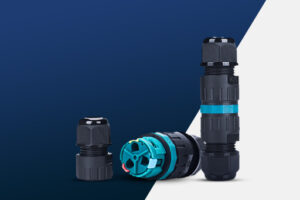

Two connectors. Same wire. Same application. One uses a screw, one uses a spring. The price difference is small. The installation time difference is not. Here is how to decide which one belongs on your next project.
Screw connectors use a metal clamp tightened by a screw to secure the wire. Screwless connectors use a spring mechanism that grips the wire automatically when inserted — no tools needed. For projects with large numbers of connection points, screwless connectors reduce installation time by 50–70% and eliminate torque-related failures. For high-current runs above 2.5mm², screw connectors remain the more appropriate choice.
I’ve supplied both types of connectors to projects across Southeast Asia for over 15 years. The question of which to use comes up on almost every project — and the honest answer is that neither type is universally better. The right choice depends on your wire size, your installation volume, your crew’s skill level, and how much maintenance access you expect over the life of the installation.
This article answers the six questions I hear most often from project buyers and electrical contractors when they’re deciding between screw and screwless technology.
What Is the Difference Between a Screw Connector and a Screwless Connector?
Most buyers know these two connector types exist. Fewer understand exactly how each one actually holds the wire — and why that difference matters in practice.
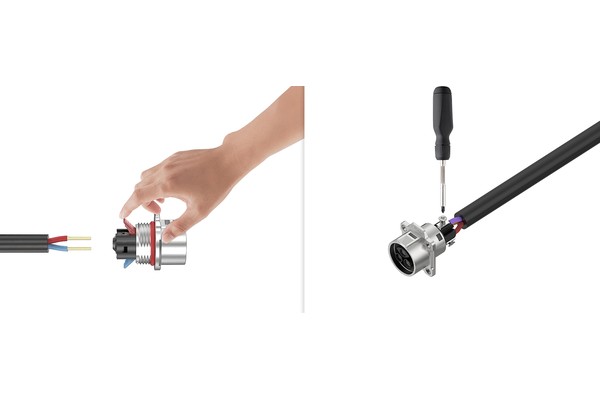
A screw connector clamps the wire between a metal plate and a conductor bar by tightening a screw. The clamping force depends entirely on the torque applied during installation. A screwless connector — also called a spring-cage or push-in connector — uses a stainless-steel spring that grips the wire automatically when inserted. No tools are needed and no torque must be applied.
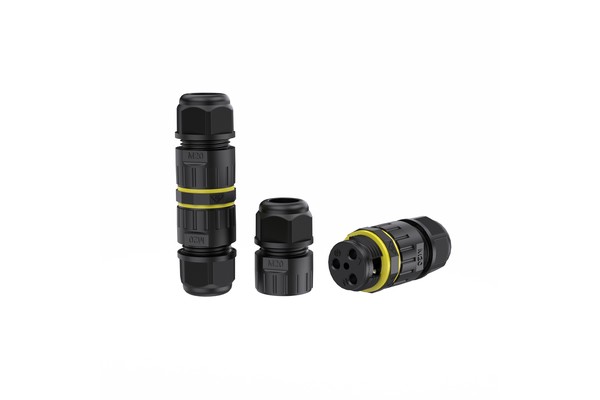
The screw connector is the older of the two technologies by a wide margin. Screw terminals have been the standard method for connecting conductors to electrical devices for over a century. The principle is simple: insert the stripped wire, tighten the screw, and the clamping plate presses the conductor against the contact bar. The connection holds because of friction and mechanical pressure.
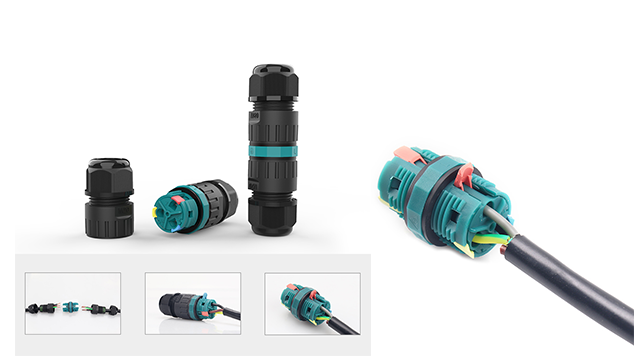
The screwless connector reverses this logic. Instead of applying force with a tool, the spring inside the connector does the work. You strip the wire to the correct length, push it into the entry port, and the spring clamps it immediately. The connection is made in one motion. On a lever-nut variant — the type popularized by WAGO’s 221 series — you open a small lever, insert the wire, and close the lever. The spring applies consistent pressure to the conductor regardless of who made the connection or how.
Screw vs Screwless: Core Technical Differences
| Feature | Screw Connector | Screwless Connector |
|---|---|---|
| Connection method | Screw torque clamps wire | Spring grips wire automatically |
| Tools required | Screwdriver + torque tool | None (or small lever) |
| Installation time | Baseline | 50–70% faster |
| Connection quality | Depends on installer torque | Consistent regardless of installer |
| Wire range | 0.5mm² to 6mm² | 0.5mm² to 2.5mm² (standard) |
| Re-termination | Strip screw, re-insert | Release lever or spring, re-insert |
| Visual confirmation | Screw head visible | Transparent housing (on lever-nut types) |
AGX manufactures both types in waterproof configurations. The Screw Waterproof Connector series handles conductors from 0.5mm² to larger cross-sections for high-current applications. The Screw-Free Waterproof Connector series covers 0.5mm² to 2.5mm² for fast, tool-free installation inside IP67 and IP68-rated enclosures.
Are Screwless Connectors Actually as Reliable as Screw Connectors?
This is the question I hear most often from buyers who have used screw terminals their entire career and are considering screwless technology for the first time. The concern is understandable. A screw connection is visible and tactile — you can see and feel when it’s tight. A spring connection feels like it might just pop out.
Screwless spring-cage connectors are tested to the same international standards as screw terminals — EN60998, EN62444, and UL2238. The spring applies a consistent, controlled clamping force that does not depend on the installer’s technique. Research from WAGO shows that the majority of electricians who switch to spring-cage technology do not return to screw connectors, citing reliability, speed, and overall cost-effectiveness.
The reliability question is really a question about where failure risk lives. With a screw connector, the risk lives in the installation process. If the electrician applies too little torque, the clamping force is insufficient and the conductor can work loose under load — increasing contact resistance, generating heat, and eventually causing the connection to fail. If the electrician applies too much torque, the conductor strands are damaged or the screw thread strips. Both failure modes are invisible at commissioning time. They show up weeks or months later, in service.
Screwless connectors move the reliability factor from the installer to the product. The spring is a manufactured component with defined material properties. It applies the same clamping force to every wire inserted correctly, regardless of whether the installer is a 20-year veteran or a first-week apprentice. The connection quality is consistent across an entire installation.
Where Screw Connectors Fail — and Why Screwless Connectors Don’t Have the Same Problem
| Failure Mode | Screw Connector | Screwless Connector |
|---|---|---|
| Under-torqued connection | Conductor works loose, resistance increases | Not possible — spring applies constant force |
| Over-torqued connection | Conductor damaged, thread stripped | Not possible — no torque applied |
| Installer skill dependency | High — torque varies between installers | Low — spring does the work |
| Loose connection under load | Possible if not re-checked | Spring compensates automatically |
| Visual inspection | Requires checking screw tightness | Transparent housing confirms insertion |
One important clarification: the reliability of a screwless connector depends on the quality of the spring material. A cheap screwless connector with a low-grade steel spring will fatigue over time and lose clamping force. A quality connector with a precision-formed stainless-steel spring maintains its clamping force across thousands of insertion cycles and years of service. AGX Screw-Free Waterproof Connectors are certified to EN60998, EN62444, and UL2238 — the same standards that govern screw terminal connectors — confirming that the spring-cage technology meets equivalent safety and performance requirements. When evaluating any screwless connector, always ask for the spring material specification and the certification test report.
Do Screwless Connectors Hold Up Under Vibration and Heat in Outdoor Environments?
This question comes up specifically on industrial and infrastructure projects — road lighting, factory outdoor panels, solar installations — where connectors face mechanical vibration from traffic or machinery, and thermal cycling from Southeast Asia’s tropical climate.
Screwless spring-cage connectors are specifically designed to maintain clamping force under vibration and thermal cycling. The spring automatically compensates for conductor movement caused by vibration or thermal expansion. Screw connectors, by contrast, can loosen under repeated vibration cycles and require periodic re-tightening to maintain their rated clamping force.
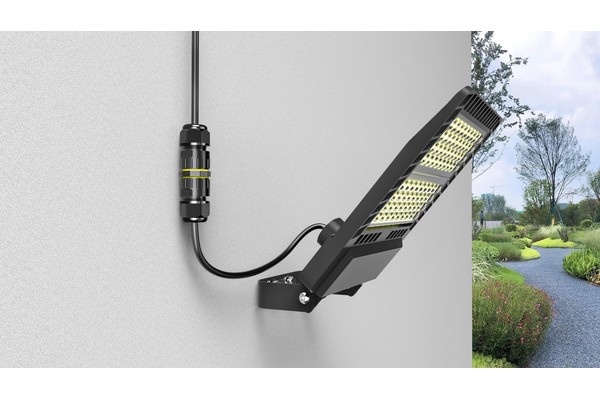
The vibration issue is well-documented in industrial electrical engineering. A screw terminal tightened to the correct torque will hold its clamping force in a static environment. When exposed to repeated vibration — from passing vehicles, nearby machinery, or wind-induced movement in overhead installations — the screw can gradually rotate backward. This is the same mechanism that causes bolts to work loose on machinery. Prevention requires either thread-locking compound, anti-vibration washers, or regular re-torquing on a maintenance schedule.
The spring in a screwless connector does not loosen under vibration. It flexes with the movement and returns to its clamped position. The IEC 60068-2-6 vibration test — which subjects terminal blocks to defined vibration profiles — is a certification requirement for quality screwless connectors. This test verifies that the spring maintains contact force across the specified vibration range.
Environmental Performance Comparison
| Environmental Challenge | Screw Connector | Screwless Connector |
|---|---|---|
| Mechanical vibration | Can loosen — requires anti-vibration design | Spring compensates automatically |
| Thermal cycling (day/night temp swing) | Screw loosens as conductor expands and contracts | Spring adjusts to conductor movement |
| High ambient temperature (60°C+) | Plastic housing can soften if substandard | Verify spring rated to operating temp |
| Maintenance-free operation | Requires periodic re-tightening | Designed for maintenance-free service |
| Long-term outdoor service (10+ years) | Re-tightening schedule required | Spring fatigue is the failure mode to check |
The thermal cycling point is particularly relevant for Southeast Asian outdoor projects. In a tropical climate, a junction box sitting in direct sun can reach internal temperatures of 60–70°C during the day and cool to 25°C or lower at night. Every thermal cycle causes the copper conductor inside the terminal to expand and contract slightly. Over years of daily cycling, this movement gradually reduces the effective clamping force on a screw terminal. A spring-cage connector compensates for this movement automatically because the spring is always under compression — it follows the conductor as it expands and contracts.
How Much Faster Is Screwless Installation — and Does It Actually Save Money on a Project?
Speed in connector installation is not about individual connections. It is about what happens across hundreds or thousands of connections on a project — and what the accumulated time difference means for your labor budget.
Switching from screw to screwless connectors reduces installation time by 50–70% per connection point. On a 500-luminaire street lighting project with three connection points per fixture — 1,500 total connections — this time saving translates directly into reduced labor days on site. The unit cost premium of screwless connectors is typically recovered within the first production cycle through labor savings alone.
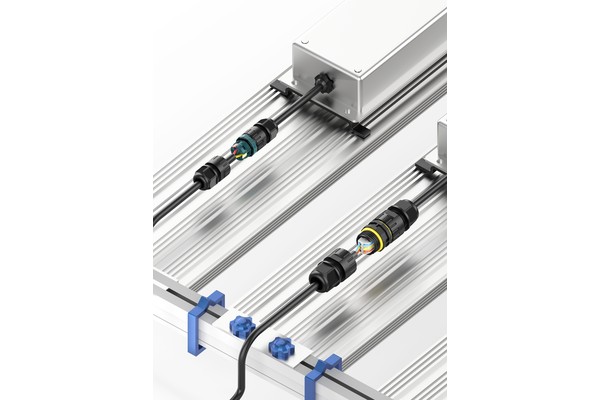
The 50–70% time saving figure comes from documented industry research. Phoenix Contact published data showing factories that switched to push-in terminal technology reduced assembly time by 60–70%. WAGO’s research across domestic electrical installation projects showed approximately 50% wiring time reduction. These numbers are consistent because the time saving comes from a simple source: you eliminate the physical actions of picking up a screwdriver, locating the screw, tightening to torque, and verifying the connection.
Let me put this into practical project numbers for a Southeast Asia street lighting context.
Real Project Cost Calculation: 500-Luminaire Street Lighting Run
| Factor | Screw Connector | Screwless Connector |
|---|---|---|
| Total connection points | 1,500 | 1,500 |
| Time per connection | ~2 minutes | ~45 seconds |
| Total installation time | ~50 hours | ~18–20 hours |
| Labor saving | — | ~30 hours |
| Unit price premium | Baseline | +10–20% |
| Labor cost saving | — | Exceeds unit cost premium |
The maintenance-free characteristic of screwless connectors adds a further cost advantage that does not appear in the initial project budget but accumulates over the service life of the installation. A screw terminal junction box on a road lighting run should ideally be opened and re-torqued after the first year of service, then checked every few years thereafter. Each maintenance visit has a cost — access, labor, traffic management if the box is on a road. A screwless connector inside an IP68 box does not require re-tightening visits.
What Wire Types and Sizes Are Compatible with Screwless Connectors?
Not every wire on a project is compatible with screwless connection technology. Understanding the compatibility limits prevents specification errors that only show up when the product arrives on site.
Standard screwless push-in and spring-cage connectors accept solid (rigid) conductors, stranded conductors, and fine-stranded conductors from 0.5mm² to 2.5mm² in copper. For conductors above 2.5mm² up to 6mm² — screw terminal connectors remain the correct specification.
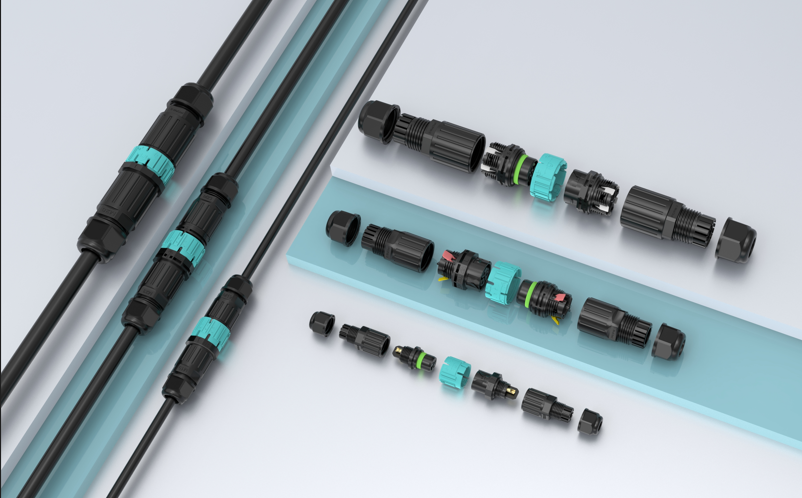
The 2.5mm² upper limit is the most common compatibility constraint buyers encounter. Most branch circuit and luminaire feed cables on street lighting and solar projects use conductors at 1.5mm² to 2.5mm² — these are fully compatible with AGX screwless connectors. The limitation appears on main distribution cables where conductors of 4mm² or 6mm² are common. This is where the AGX screw connector takes over.
Stranded versus solid conductor is the second compatibility factor. Basic push-in connectors — the type where you simply push the wire straight in without a lever — work best with solid (rigid) conductors. Fine-stranded flexible conductors need either a lever-nut type connector (where the lever opens the spring cavity wide enough to accept the strands) or a wire ferrule crimped onto the conductor end before insertion. Using fine-stranded wire in a basic push-in connector without a ferrule can result in individual strands missing the contact area, reducing the effective cross-section of the connection.
Wire Compatibility Guide
| Conductor Type | Basic Push-In | Lever-Nut | Screw Terminal |
|---|---|---|---|
| Solid copper 0.5–2.5mm² | ✓ Best | ✓ | ✓ |
| Stranded copper 0.5–2.5mm² | ✓ With ferrule | ✓ | ✓ |
| Fine-stranded flexible 0.5–2.5mm² | ✗ (need ferrule) | ✓ | ✓ With ferrule |
| Copper 2.5–6mm² | ✗ | ✗ | ✓ |
| Aluminum conductor | ✗ | ✗ | ✗ (not supported) |
AGX Screw-Free Waterproof Connectors accept solid, stranded, and fine-stranded copper conductors from 0.5mm² to 2.5mm², rated at 41A and 450V. For project specifications requiring conductors from 2.5mm² to 6mm², the AGX Screw Waterproof Connector series handles that range with the same IP67/IP68 housing standard.
When Should You Choose Screw Over Screwless — and Vice Versa?
After covering reliability, vibration performance, speed, and wire compatibility, the selection decision comes down to four project-specific factors. Here is the framework I use when advising project buyers.
Choose screwless connectors when your project has a large number of connection points with conductors up to 2.5mm², when your installation crew’s skill level varies, or when you need maintenance-free long-term service. Choose screw connectors when you are working with conductors from 2.5mm² to 6mm², or when the project requires documented torque verification for compliance purposes.
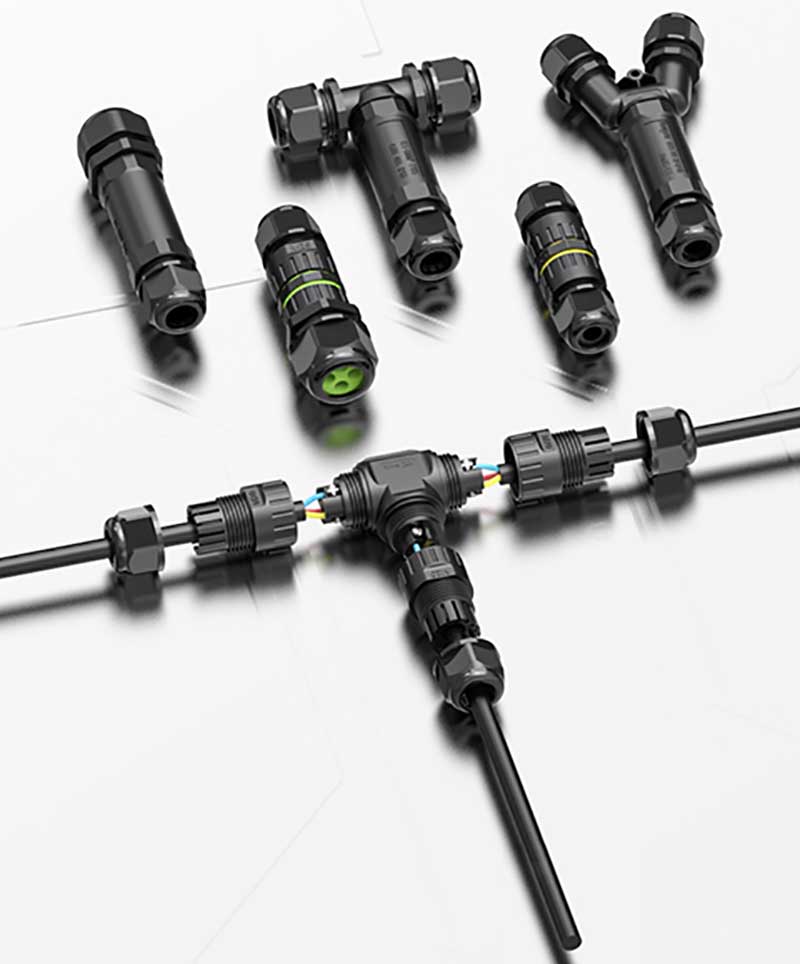
The skill-level factor is the one that gets underweighted most often in Southeast Asian project specifications. A project spec written by an engineer assumes trained, experienced installation personnel. The reality on a 500-luminaire highway lighting project delivered over six months, using multiple subcontractors, is that connection quality will vary significantly between work crews. Screwless connectors remove this variable from the equation. Every connection that is correctly inserted — wire stripped to the right length, pushed fully into the spring cavity — produces the same result regardless of who made it.
The compliance and documentation factor works in the opposite direction. Some project contracts — particularly government infrastructure tenders and projects funded by international development agencies — require documented evidence that all electrical connections were made to specified torque values. This is a quality management requirement that assumes screw terminal technology. A screwless connector cannot produce a torque verification record because no torque is applied. For these projects, screw terminals are the only compliant choice regardless of the speed or reliability advantages of screwless technology.
Complete Selection Decision Guide
| Project Factor | Choose Screw Connector | Choose Screwless Connector |
|---|---|---|
| Conductor size | 2.5mm² to 6mm² | 0.5mm² to 2.5mm² |
| Conductor material | Copper 2.5–6mm² | Copper 0.5–2.5mm² |
| Number of connections | Small volume (<50 points) | Large volume (100+ points) |
| Installer skill level | Controlled, trained crew | Mixed skill levels |
| Vibration environment | Low (with anti-vibration design) | High (spring compensates) |
| Maintenance schedule | Regular access planned | Maintenance-free preferred |
| Compliance documentation | Torque record required | No torque record possible |
| Project type (SEA) | Industrial main distribution | Street lighting, solar, control |
The mixed-use strategy is often the right answer for large projects. Use screw terminal connectors for the main distribution points — the high-current feeds where conductors are large and connections are permanent. Use screwless connectors for the branch circuits, luminaire connections, and control wiring — where connection volume is high, conductors are smaller, and installation speed matters more. This combination gives you the current-handling capacity of screw terminals where you need it and the speed and consistency of screwless technology everywhere else.
Conclusion
Wire size sets the boundary: 2.5mm² to 6mm² goes to screw terminals. Below 2.5mm² with high connection volume, screwless saves time, reduces errors, and lowers your total project cost.
AGX manufactures both screw and screwless waterproof connectors for outdoor electrical projects across Southeast Asia. All products are IP67/IP68 certified to IEC 60529. Browse the Screw Waterproof Connector and Screw-Free Waterproof Connector ranges, or request a free sample for your next project.