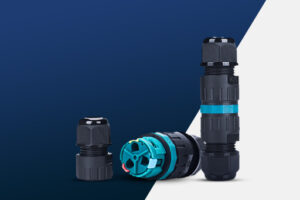

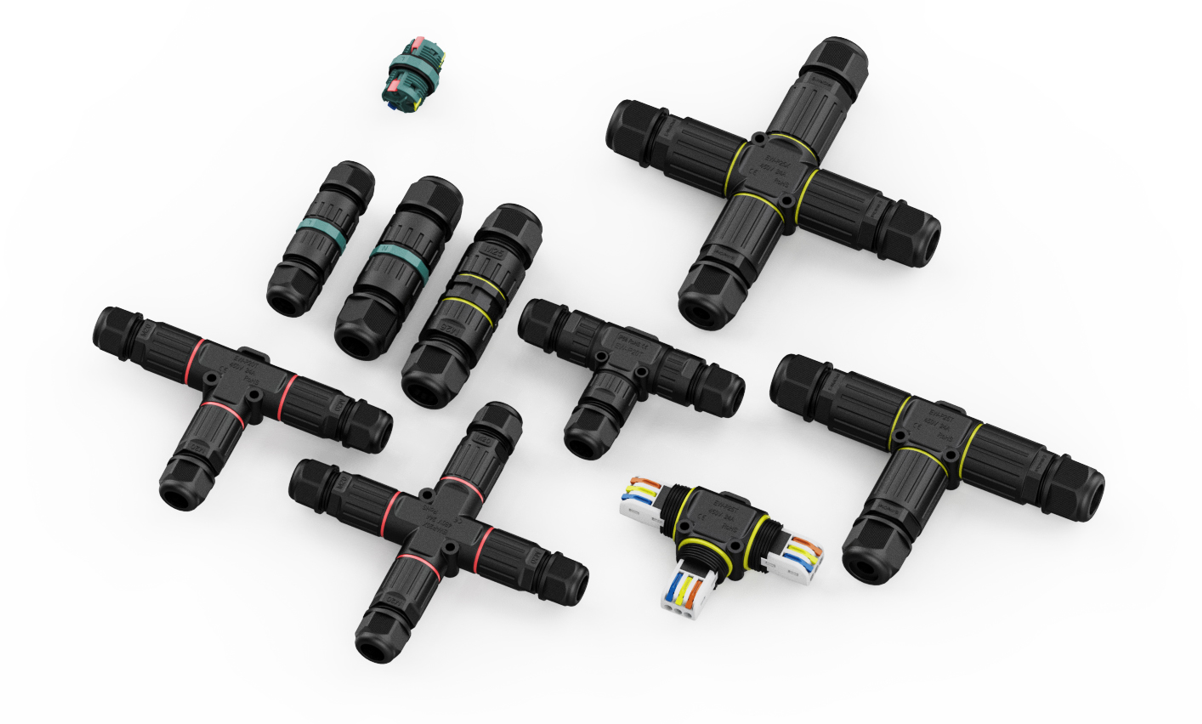
Choosing the wrong connector can shut down a whole system. I have seen it happen too many times. The right connector keeps power flowing safely, no matter the environment.
There are 8 main types of waterproof electrical connectors: screw terminal connectors, screwless push-in connectors, circular connectors, blade connectors, butt splice connectors, Anderson-style connectors, M12/M8 connectors, and waterproof lever connectors. Each type suits a different wiring environment, load, and installation need.
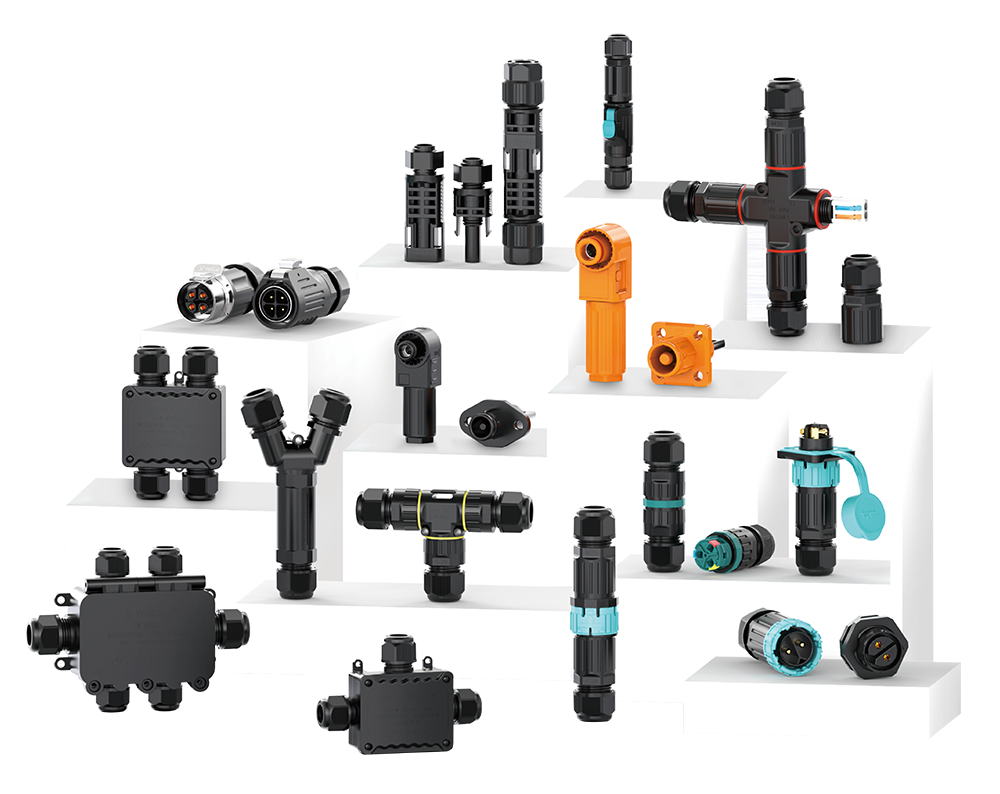
I have worked with waterproof connectors for 15 years, from my early days on the factory floor to running my own production operation. One lesson I keep coming back to: the connector type you pick at the start of a project determines how much trouble you deal with later. So let me walk you through each type, what it does well, and where it belongs.
What Makes a Screw Terminal Connector the Right Choice?
Most buyers already know screw terminal connectors. They are reliable. They are everywhere. But are they always the right call?
A screw terminal waterproof connector uses a metal screw to clamp the wire in place inside a sealed housing. It works best in applications where the connection needs to be strong, the wire gauge is thick, and the environment is wet or dusty. Common IP ratings go from IP65 to IP68.
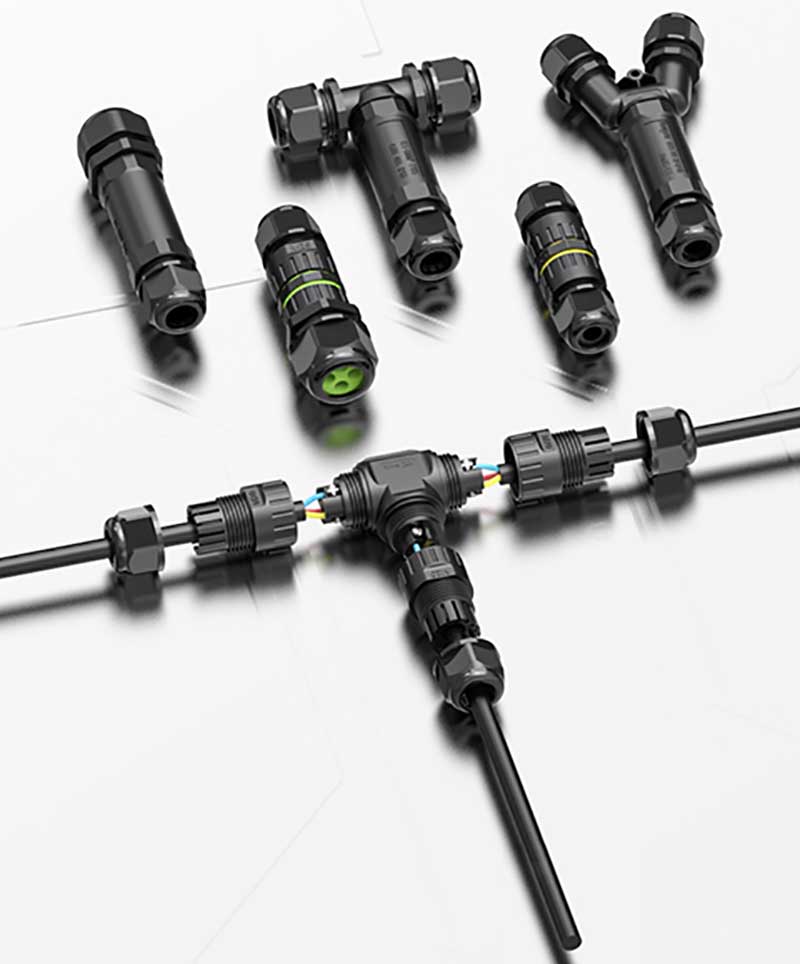
Screw terminals have been the standard in industrial wiring for decades because they hold up. The clamping force is high, the contact resistance is low, and you can re-terminate the wire if something goes wrong. That said, they take more time to install than push-in types, and if a technician under-tightens the screw, you get a poor connection that fails under vibration.
When does a screw terminal connector make sense?
Use it when:
| Condition | Why Screw Terminal Fits |
|---|---|
| Wire gauge is 10 AWG or thicker | Screw clamp handles heavy wire well |
| The connection will rarely be opened | Installation time is not a daily cost |
| High vibration environment | Screw-locked wire resists loosening |
| Panel or junction box mounting | Terminal blocks mount neatly in enclosures |
I personally use screw terminals for any outdoor power distribution panel where the wires stay put for years. The time you spend on installation pays back in reliability.
Why Are Screwless Push-In Connectors Growing So Fast?
Walk into any electrical distributor in Europe right now and you will see screwless connectors taking over entire shelves. That shift is not random.
A screwless push-in waterproof connector uses a spring-loaded clamp inside a sealed housing. You push the stripped wire in, and the spring holds it. No tools needed. Installation time drops by more than half compared to screw terminals, which makes them popular in high-volume wiring jobs.
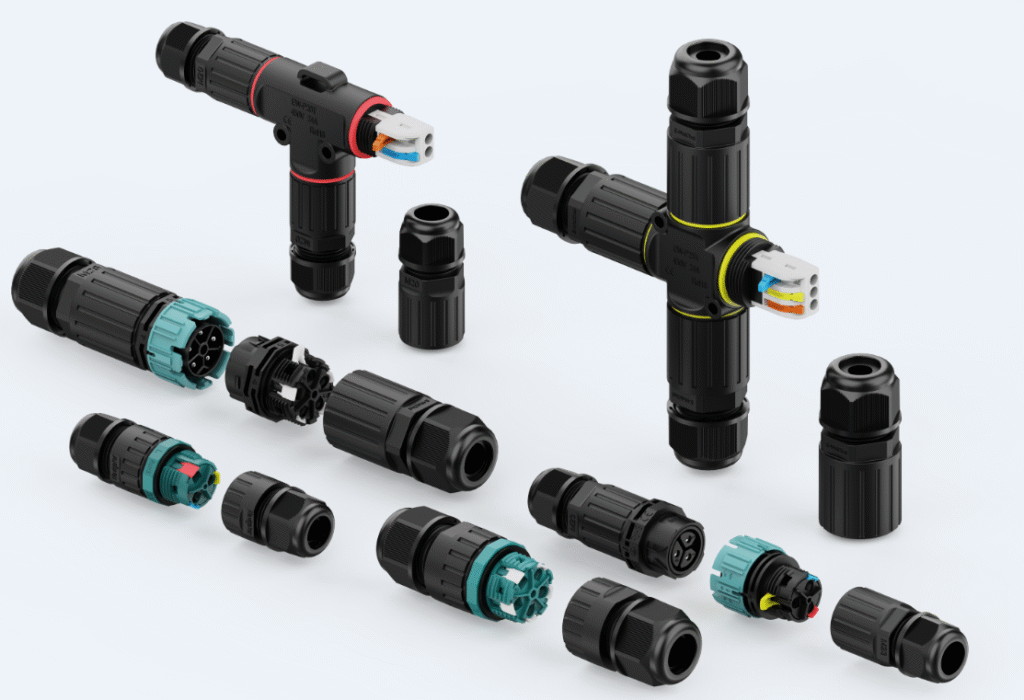
The speed advantage is real. In a project where a technician wires 200 connection points in a day, switching from screw to push-in can cut the work time by two to three hours. That is a direct labor cost saving.
How do screwless connectors compare to screw terminals?
| Feature | Screw Terminal | Screwless Push-In |
|---|---|---|
| Installation speed | Slower | Much faster |
| Tool requirement | Screwdriver needed | No tools |
| Wire re-termination | Easy | Possible but requires a release lever |
| Vibration resistance | High with correct torque | Good, but lower than screw |
| Best wire gauge range | Up to 10 AWG | Typically 16–24 AWG |
| IP rating available | IP65–IP68 | IP65–IP68 |
The main risk with screwless connectors is using them on wire sizes they were not designed for. Always check the manufacturer’s wire range. A wire that is too thin will not trigger the spring properly, and the connection will be weak.
Where Do Circular Waterproof Connectors Fit In?
If you have ever worked with outdoor lighting systems, marine equipment, or industrial sensors, you have seen circular connectors. They look different from standard connectors for a reason.
A circular waterproof connector uses a round barrel shape with a threaded or bayonet locking ring that compresses a rubber seal when tightened. This design creates a 360-degree seal around the connector body, which is why circular connectors regularly achieve IP67 and IP68 ratings with high reliability.
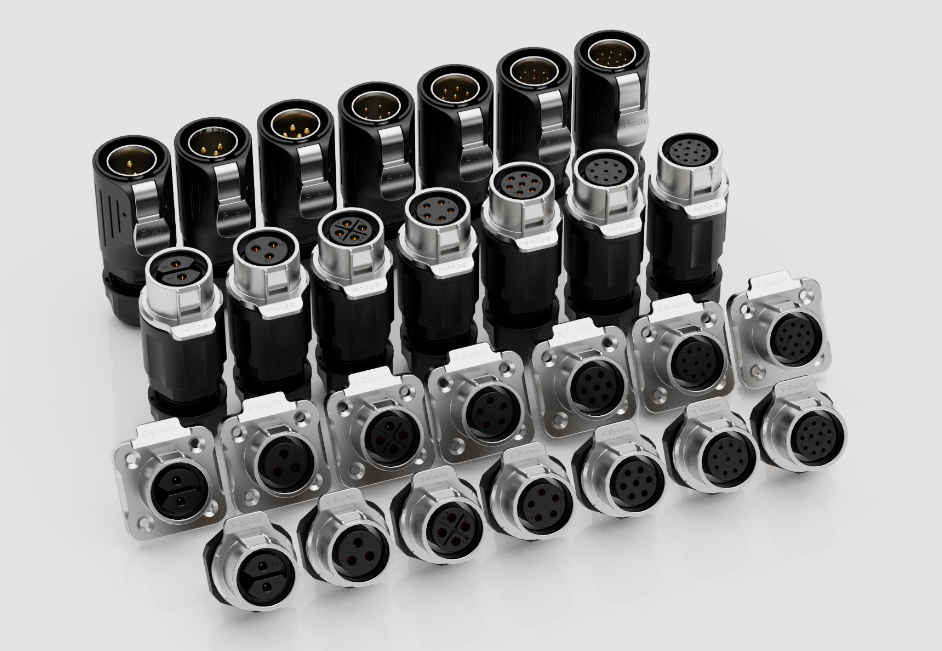
The round shape is not just about looks. A circular cross-section distributes mechanical stress evenly. When someone pulls on the cable, the load is spread around the full circumference instead of focusing on one edge. This makes circular connectors much better at handling cable strain than rectangular types.
What industries use circular waterproof connectors most?
| Industry | Application | Typical IP Rating |
|---|---|---|
| Marine | Navigation lights, bilge pumps | IP67–IP68 |
| Outdoor lighting | Street lamp wiring | IP65–IP67 |
| Agriculture | Irrigation sensors, field equipment | IP67 |
| Industrial automation | Machine sensors, actuators | IP67–IP68 |
| Automotive | Off-road vehicle wiring | IP67 |
One thing I tell my customers: if the connector will be submerged even briefly — think a field sensor hit by flood irrigation — go circular and go IP67 minimum.
When Should You Use a Waterproof Butt Splice Connector?
Not every connection happens inside a box or panel. Sometimes you need to join two wire ends in the middle of a run, inside a wall, under a vehicle, or buried in conduit.
A waterproof butt splice connector is a single-use, inline connector that joins two wire ends end-to-end inside a heat-shrink or gel-filled sleeve. When heat is applied, the sleeve shrinks and a glue layer seals the joint completely, making it suitable for direct burial and submersion.
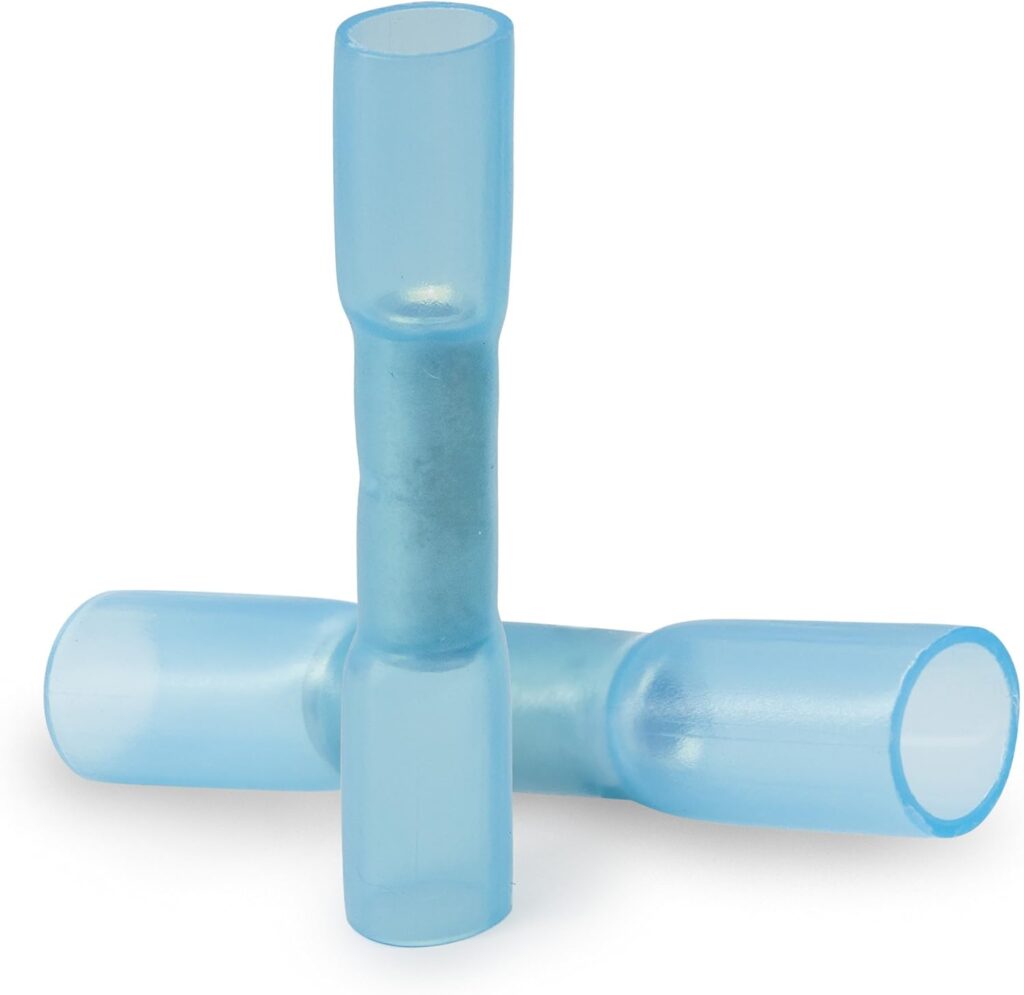
Butt splices are simple but powerful. The sealed heat-shrink version requires nothing but a heat gun. The gel-filled version requires no heat at all — you crimp and the gel does the sealing work. Both types create an inline joint that is completely sealed and mechanically strong.
Which butt splice type should you pick?
| Type | Sealing Method | Best Use Case |
|---|---|---|
| Heat shrink with adhesive | Heat gun melts inner glue | Permanent outdoor or underground joints |
| Gel-filled crimp splice | Gel seals on crimp pressure | Quick field repairs without heat tools |
| Standard crimp with tape | No built-in seal | Indoor only — not waterproof |
One mistake I see buyers make: they order standard crimp butt splices thinking they can just wrap them with tape. That works indoors. It does not work outdoors. Tape ages, cracks, and peels. Always specify waterproof butt splices for any outdoor wire joint.
What Are M12 and M8 Connectors Used For?
M12 and M8 connectors are not as well known outside industrial circles, but they dominate sensor and automation wiring worldwide.
M12 and M8 waterproof connectors are small circular connectors with 12mm and 8mm thread diameters respectively. They use a screw-lock ring to create an IP67 or IP68 seal and are designed for sensors, actuators, and data cables in industrial and outdoor automation environments.
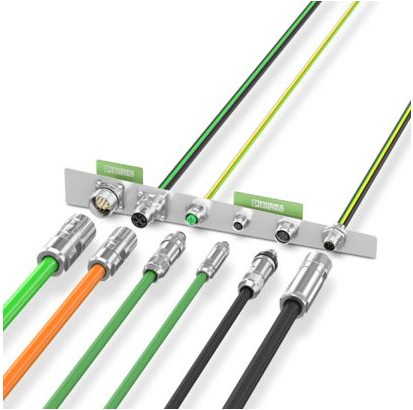
These connectors are designed around a standard that is recognized globally. That means a device with an M12 port from one manufacturer will accept an M12 cable from another. For distributors, that interoperability is a real selling point. You are not locked into one brand’s ecosystem.
M12 vs M8: what is the difference?
| Spec | M12 Connector | M8 Connector |
|---|---|---|
| Thread diameter | 12 mm | 8 mm |
| Pin count options | 2, 3, 4, 5, 8, 12 pins | 3, 4 pins |
| Typical current rating | Up to 4A | Up to 2A |
| Common application | Sensors, cameras, fieldbus | Compact sensors, LEDs |
| IP rating | IP67–IP68 | IP67 |
If your customer is wiring a production line, a greenhouse automation system, or an outdoor monitoring station, M12 and M8 connectors are likely the right product to specify.
How Do Anderson-Style Connectors Handle High-Power Applications?
For high-current applications — think EV charging, solar storage, or heavy machinery — standard connectors simply cannot handle the load. This is where Anderson-style connectors come in.
Anderson-style waterproof connectors are large, genderless power connectors rated for high current (typically 30A to 350A). Their design allows two identical connector halves to mate together, which removes the need to specify male or female versions. Many are rated IP65 to IP67 for outdoor use.
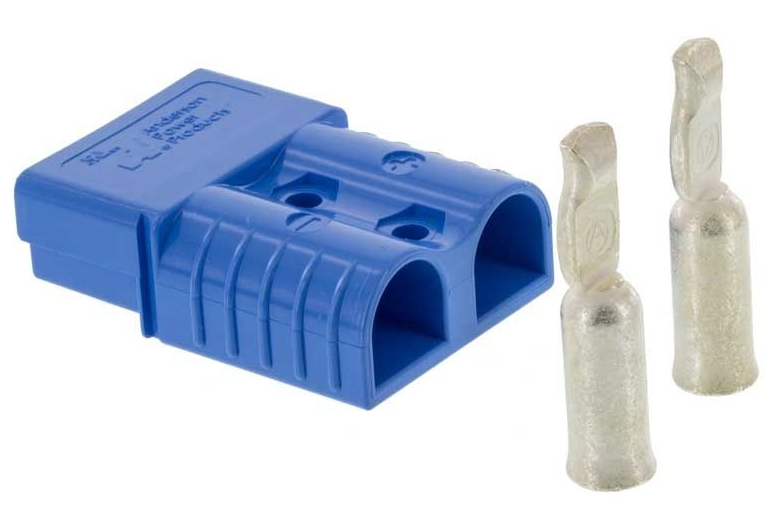
The genderless design is a practical advantage for distributors. You stock one part number instead of two, and your customers can connect any two units without worrying about polarity orientation on the housing (though internal terminal polarity still matters). For fleet charging depots and solar installations, this simplicity saves real money in inventory management.
What current ratings are available?
| Model Size | Typical Current Rating | Common Application |
|---|---|---|
| SB50 style | 50A | EV auxiliary systems, golf carts |
| SB120 style | 120A | Industrial vehicles, forklifts |
| SB175 style | 175A | Large UPS systems, solar storage |
| SB350 style | 350A | Heavy equipment, marine power |
Always match the connector current rating to the cable size. An undersized connector on a heavy cable will overheat and fail. Oversizing is safe. Undersizing is not.
When Is a Waterproof Lever Connector the Best Option?
Lever connectors are a newer category, but they are gaining fast in markets where rewiring and maintenance happen often.
A waterproof lever connector uses a flip-down lever to open and close the wire clamp inside a sealed housing. You open the lever, insert the wire, and close the lever to lock it. The connection can be opened and closed many times without damage, which makes it ideal for systems that need regular maintenance or reconfiguration.
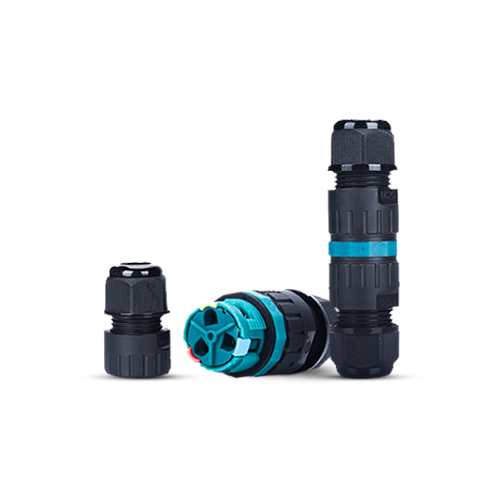
What makes lever connectors stand out is the combination of speed and re-usability. Unlike heat-shrink splices, which are permanent, lever connectors can be opened with a fingernail. Unlike screw terminals, you do not need a screwdriver. For maintenance technicians who work in the field, this matters a lot.
Lever connector vs. other reusable connector types
| Feature | Lever Connector | Screw Terminal | Push-In Connector |
|---|---|---|---|
| Tool-free installation | Yes | No | Yes |
| Re-openable easily | Yes | Yes | Sometimes |
| Speed of connection | Very fast | Slow | Fast |
| IP rating achievable | IP65–IP67 | IP65–IP68 | IP65–IP67 |
| Best wire gauge | 24–10 AWG | 22–6 AWG | 28–10 AWG |
If your customer runs a smart building system, a modular outdoor display, or any network of sensors that gets updated regularly, lever connectors will reduce their maintenance time significantly.
What Makes Blade Waterproof Connectors Unique?
Blade connectors are simple by design. That simplicity is exactly what makes them valuable in specific situations.
A waterproof blade connector uses a flat metal tab (the blade) that slides into a matching sleeve contact. When both parts are enclosed in waterproof housings with rubber seals, the assembled connector achieves IP65 or IP67 ratings. Blade connectors are fast to assemble and are widely used in automotive and outdoor power applications.
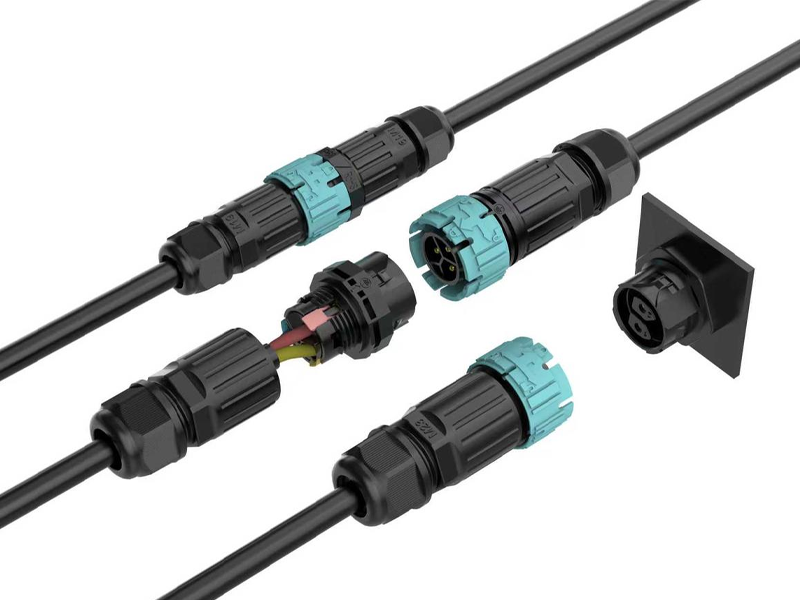
The blade design allows very fast mating and unmating. In automotive and transport wiring, where connectors are opened and closed many times over the vehicle’s life, this is a critical advantage. The contact area is large relative to the connector size, which gives good current capacity without a bulky housing.
Where are blade waterproof connectors most commonly used?
| Application | Why Blade Fits |
|---|---|
| Automotive wiring harnesses | Fast assembly on production lines |
| Trailer lighting systems | Easy field connection and disconnection |
| Outdoor power distribution | Simple, strong mating action |
| Agricultural machinery | Resistant to mud and moisture ingress |
| Marine accessories | Compact size, good current handling |
The one limitation of blade connectors is that the male blade can bend if the connector is forced together at an angle. On a production line this is not a problem. In field use, where technicians may connect quickly without looking, bent blades do happen. Proper training or a guided housing design can prevent this.
Conclusion
Now you know the 8 main types of waterproof electrical connectors, what each one does well, and where each one belongs. That knowledge saves you from a costly mismatch — the wrong connector in the wrong environment is how systems fail and projects go over budget.
Use this guide as a reference every time a new project comes up. If the environment is wet, check the IP rating. If the current is high, check the amperage rating. If the team needs to rewire often, choose a reusable type. These three questions will point you to the right connector almost every time.
At AGX, we have spent 15 years solving exactly these kinds of problems — for distributors, engineers, and product managers across the world. We do not just sell connectors. We help you pick the right one, source it at the right price, and avoid the mistakes that slow projects down.
If you are looking for a waterproof connector supplier you can trust — one that understands your application, not just the catalog — I would love to hear from you. Visit us at agxconnector.com or send me a message directly. Let’s find the right connector for your next project together.