
You specify IP67 on your project. The installation goes well. Eight months later, water is inside the connector and the lighting run is down. The rating was right — but the environment wasn’t what you assumed it was.
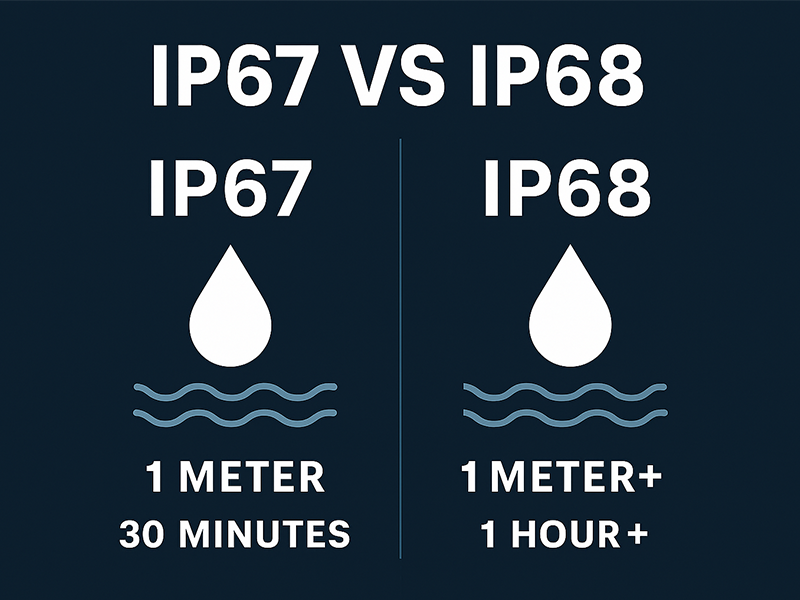
IP67, IP68, and IP69K are three different levels of waterproof protection defined by IEC 60529 and ISO 20653. IP67 covers temporary immersion up to 1 meter for 30 minutes. IP68 covers continuous immersion beyond 1 meter, with exact conditions defined by the manufacturer. IP69K covers high-pressure, high-temperature water jets — not immersion. They test different things, and choosing the wrong one for your project will cost you.
I’ve been working with waterproof connectors for 15 years. The IP rating question is the one I get most often from project buyers across Southeast Asia — and the one where I see the most expensive mistakes made. The confusion usually starts with a simple assumption: higher number equals better protection. That assumption is wrong in ways that matter.
This article breaks down exactly what each rating means, what it doesn’t mean, and how to match the right rating to the real conditions your connectors will face.
What Do IP67, IP68, and IP69K Actually Mean?
Most buyers know IP ratings exist. Far fewer know what the two digits actually represent — and that gap is where specification errors happen.
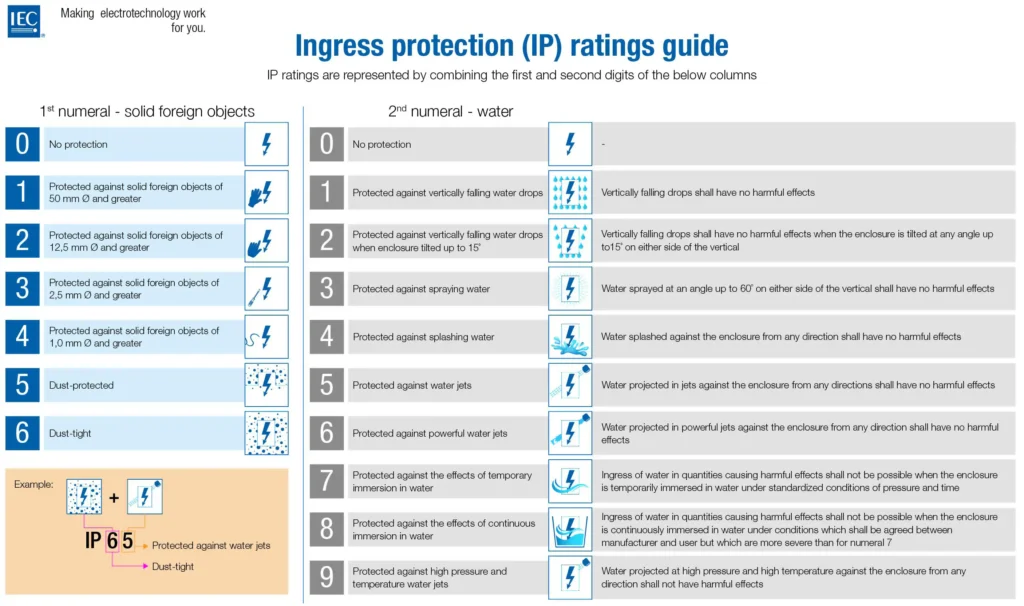
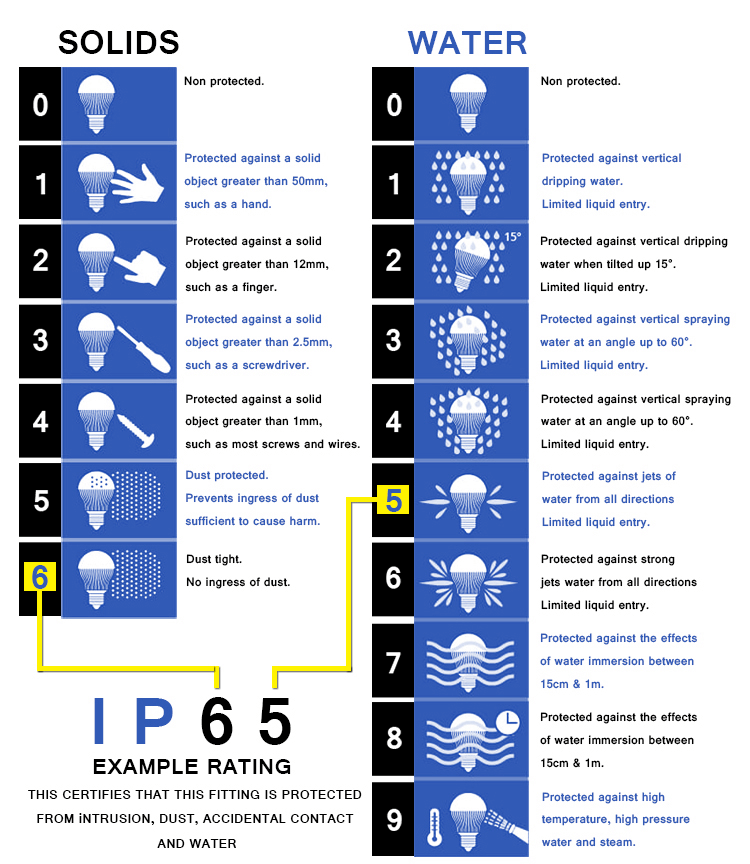
The IP code (Ingress Protection) is defined by IEC 60529. The first digit rates protection against solid particles on a scale of 0 to 6. The second digit rates protection against water on a scale of 0 to 9. Both IP67 and IP68 have a first digit of 6, meaning complete dust-tight protection. The difference between them lies entirely in the second digit — the water test.
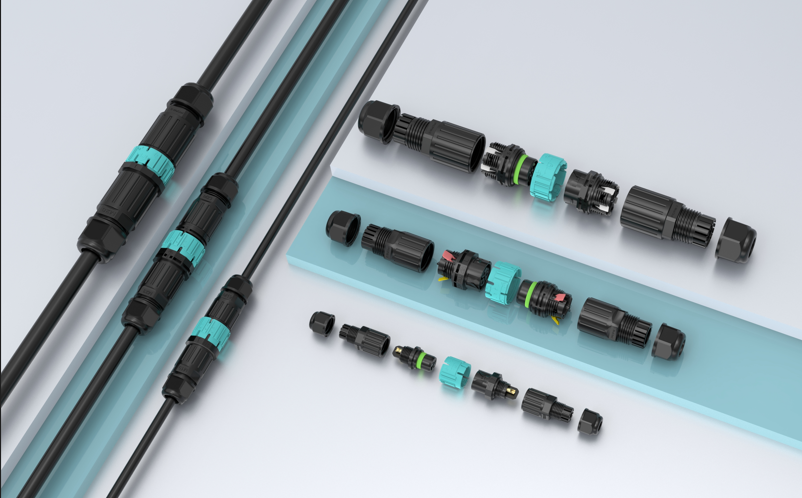
The first digit of 6 — shared by IP67, IP68, and IP69K — means no dust can enter the enclosure under test conditions. This is the highest level of solid particle protection in the standard. There is no difference between these three ratings when it comes to dust. If your project environment has both dust and water exposure, all three ratings provide equivalent dust protection. The decision between them is always about water.
The second digit is where the ratings diverge — and where the confusion begins.
IP67, IP68, IP69K: Test Conditions Side by Side
| Rating | Water Test | Standard | Test Conditions | What It Covers |
|---|---|---|---|---|
| IP67 | Temporary immersion | IEC 60529 | 1m depth, 30 minutes, fresh water | Rain, flooding, accidental submersion |
| IP68 | Continuous immersion | IEC 60529 | Manufacturer-defined (typically >1m, >30 min) | Underground, prolonged wet exposure |
| IP69K | High-pressure hot jet | ISO 20653 | 80°C water, 80–100 bar, 10–15cm distance | Steam cleaning, pressure washing |
The IP67 test is precise and standardized. Every manufacturer tests to the same conditions: 1 meter of fresh water, 30 minutes. You know exactly what you are getting.
The IP68 test is not standardized in the same way. IEC 60529 defines it as “continuous immersion under conditions specified by the manufacturer.” One manufacturer’s IP68 might be 1.5 meters for 1 hour. Another’s might be 3 meters for 24 hours. Both are technically IP68. This matters enormously when you are sourcing connectors for a critical infrastructure project. Always ask for the exact test conditions in the manufacturer’s datasheet — not just the IP68 label.
IP69K comes from a different standard entirely: ISO 20653, originally developed for road vehicles in the German automotive industry. The test involves blasting the connector with 80°C water at 80–100 bar of pressure from a nozzle held 10 to 15 centimeters away. This is a mechanical stress test as much as a water test. The force of the jet at that pressure can shear poorly designed seals and strip adhesive labels.
Is IP68 Always Better Than IP67?
This is the question buyers ask most often — and the answer is not what most people expect.
IP68 is not universally “better” than IP67. It offers higher water immersion resistance, but for most outdoor electrical projects — street lighting, solar installations, outdoor panels — IP67 provides sufficient protection at lower cost. Specifying IP68 when IP67 is adequate adds cost without adding real-world benefit.
The misconception runs deeper than just IP67 vs IP68. Many buyers assume IP69K is the “highest” waterproof rating and specify it for outdoor projects because they want maximum protection. This thinking is understandable, but technically wrong — and expensive.
IP69K and IP68 test completely different physical conditions. IP68 tests static water pressure at depth. IP69K tests dynamic force and thermal shock from a high-pressure jet. A connector designed with soft seals for deep-water static pressure resistance can have those seals blown apart by an IP69K jet. Conversely, a connector with rigid seals engineered to resist IP69K jet force may not maintain its seal under the slow, even pressure of prolonged immersion.
This is why the standard allows dual ratings. When you see a connector labeled IP68/IP69K, it has been tested and certified to both conditions independently. This dual certification exists precisely because neither rating implies the other.
What Each Rating Actually Costs You
The cost difference between ratings matters on a project with hundreds or thousands of connectors.
| Factor | IP67 | IP68 | IP68/IP69K Dual |
|---|---|---|---|
| Sealing design | Standard O-ring | Enhanced O-ring + seal | Dual seal system |
| Materials | Standard PA66 | Higher-grade PA66 or PBT | High-temp resistant materials |
| Testing cost | Standardized, lower | Manufacturer-specific, moderate | Two full test cycles, highest |
| Relative unit cost | Baseline | +10–30% | +30–60% |
| When justified | General outdoor | Underground, marine, continuous wet | Food processing, daily pressure wash |
The cost premium for IP68 over IP67 is real but often justified for Southeast Asian outdoor infrastructure, where monsoon flooding means connectors in ground-level junction boxes can be submerged for hours or days at a time. The cost premium for IP69K is only justified when the connector will genuinely face high-pressure cleaning — which almost no outdoor electrical project requires.
When Do You Actually Need IP69K?
IP69K originated in the German automotive industry for a specific reason: vehicle components and food processing equipment need to be steam-cleaned with high-pressure hot water daily or weekly. That is the environment IP69K was designed for.
IP69K is the right specification when your connectors will be directly exposed to high-pressure water jets at close range — specifically in food and beverage processing, pharmaceutical manufacturing, agricultural machinery that undergoes regular pressure washing, and mining or construction equipment subjected to daily site clean-downs.
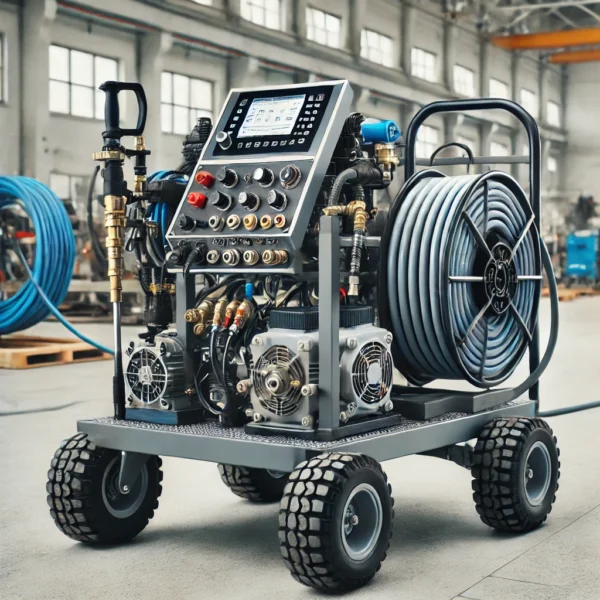
For the vast majority of outdoor electrical projects across Southeast Asia, IP69K is not needed and not cost-effective. Road lighting, solar farms, industrial outdoor panels, telecom base stations, and agricultural irrigation systems do not involve high-pressure steam cleaning of electrical connectors. Specifying IP69K on these projects simply increases cost with no operational benefit.
IP69K Applications: Where It Is and Is Not Needed
| Application | IP69K Needed? | Why |
|---|---|---|
| Road and highway lighting | No | No high-pressure cleaning of connectors |
| Solar PV installations | No | Rain and immersion risk, not jet pressure |
| Outdoor factory panels | No (usually) | Standard cleaning methods |
| Agricultural irrigation control | No | Ground moisture, not pressure washing |
| Food processing machinery | Yes | Daily high-pressure steam cleaning required |
| Mining equipment | Sometimes | Depends on site clean-down procedures |
| Construction vehicle components | Yes | Regular high-pressure washing |
| Pharmaceutical equipment | Yes | Sterile cleaning protocols |
One important warning: specifying IP69K for an outdoor project that doesn’t need it can actually reduce your protection in ways you don’t expect. Some IP69K-certified connectors use rigid, high-compression seals designed to resist jet force — seals that may not conform and compress properly in a standard mating cycle, reducing the effective IP67 or IP68 immersion protection you actually need. Always check whether a connector is independently certified for both ratings if your project requires both immersion resistance and occasional pressure washing.
Which IP Rating Do You Need for Common Outdoor Projects in Southeast Asia?
Southeast Asia’s climate creates specific challenges that don’t exist in the controlled lab conditions of an IP test. Monsoon rainfall, coastal salt air, tropical UV exposure, and high ambient temperatures all affect how a connector performs in real service — independently of its IP rating.
For most outdoor electrical projects in Southeast Asia, IP68 is the baseline specification. Monsoon flooding regularly submerges ground-level connectors and junction boxes beyond the 1-meter, 30-minute limit that defines IP67. IP67 is acceptable for above-ground mounting in non-flood-risk positions. IP69K is not required for standard outdoor electrical work in this region.
The reasoning behind defaulting to IP68 in Southeast Asia is simple: monsoon events are not short. A severe tropical storm can leave street-level cable runs and junction boxes submerged for 12 to 48 hours. An IP67 connector technically rated for 30 minutes may hold longer in practice, but it is not designed or tested for that duration. An IP68 connector, with manufacturer-specified conditions of 1 meter for 24 hours, is designed for exactly this.
Recommended IP Rating by Project Type
| Project Type | Recommended IP | Reason | Contact Material |
|---|---|---|---|
| Road and highway lighting | IP68 | Junction boxes at ground level, monsoon flooding risk | Tin-plated (power) |
| Solar PV string connectors (MC4) | IP67–IP68 | Long-term outdoor UV and rain exposure | Silver or tin-plated |
| Coastal outdoor installations | IP68 | Salt mist corrosion accelerates seal degradation | Gold-plated contacts |
| Factory outdoor automation | IP67 | Above-ground mounting, rain but not flooding | Tin-plated |
| Underground cable splices | IP68 | Continuous soil moisture, potential submersion | Gold-plated |
| Agricultural irrigation control | IP68 | Soil contact, prolonged moisture exposure | Tin-plated |
| Telecom base station interfaces | IP67–IP68 | Elevated mounting reduces flood risk | Gold-plated (signal) |
The coastal environment note deserves emphasis for buyers working in Vietnam’s coastal provinces, the Philippines, and Indonesia’s island regions. Salt mist is not tested by any IP rating — the IP standard uses fresh water. A connector with an IP68 rating in fresh water may corrode significantly faster in a salt-air environment if the contact plating and housing material are not specified for corrosion resistance. For these environments, specify gold-plated contacts and UV-stabilized PBT housing in addition to the IP68 rating.
Does the IP Rating Apply When the Connector Is Not Plugged In?
This is the question that experienced buyers know to ask — and most suppliers don’t volunteer the answer.
Most connector IP ratings apply only in the fully mated condition — when the plug is completely inserted into the socket and locked. An unmated connector sitting in an open installation has no equivalent waterproof protection. Pins are exposed to humidity, rain, and dust from the moment the connector is separated until it is mated again.
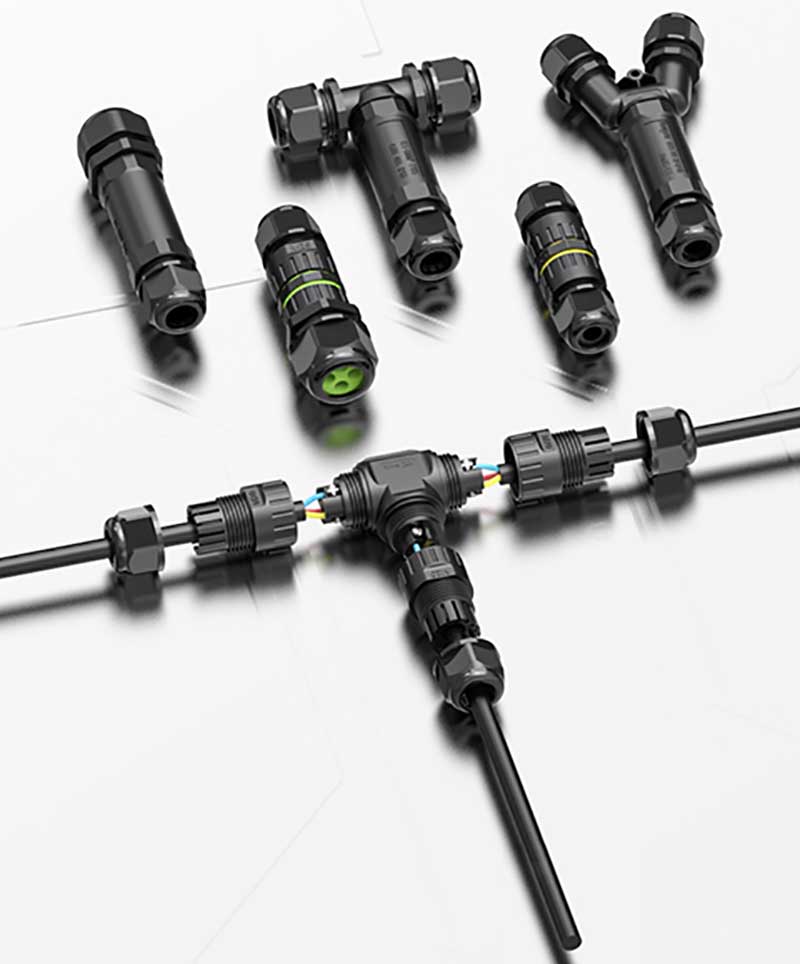
This matters most during two phases of a project. The first is phased commissioning — a common situation in large infrastructure projects where cable runs are installed and connectors are left unmated for weeks or months while other phases of the project catch up. An IP68-rated connector left open in a tropical outdoor environment for six weeks is not providing IP68 protection during that time. Humidity, insects, and fine dust all enter the unmated connector.
The second phase is maintenance. Every time a connector is unmated for service access, the IP rating is suspended until the plug is fully re-inserted and locked. If the maintenance window extends overnight, or if rain falls during the work, the open connector is unprotected.
How to Protect Unmated Connectors
| Situation | Protection Method | What to Specify |
|---|---|---|
| Phased commissioning (weeks unmated) | Captive dust cap on socket | IP54 unmated rating with dust cap |
| Brief maintenance access | Temporary cap | Dust cap retained on connector |
| Long-term single-ended cable storage | Overmolded end cap | Factory-fitted sealed end cap |
| Panel mount socket (unmated) | Panel-integrated protective cap | Captive cap with IP54 or IP65 unmated rating |
When specifying connectors for any project with phased installation or regular maintenance access, ask your supplier for the unmated IP rating with dust cap fitted. A quality connector supplier will specify both ratings on the datasheet — mated IP68 and unmated IP54 or IP65 with cap. A supplier who only provides the mated rating is not giving you complete information.
AGX junction boxes and connectors include protective caps rated IP54 in the unmated condition as standard. This ensures that connectors sitting in a staging area or installed-but-not-yet-commissioned enclosure maintain basic protection against rain and dust until the mating connection is made.
3 Questions to Ask Before You Specify an IP Rating on Your Next Project
Most IP rating mistakes come from specifying a number on a drawing without thinking through the real exposure conditions. These three questions force the right conversation before the specification is written.
Before specifying an IP rating, ask: Will the connector be submerged, or just exposed to rain and spray? Will it face high-pressure cleaning? And can the manufacturer provide the IEC 60529 test report for the exact conditions — not just the IP label on the packaging?
These questions sound simple. In practice, they eliminate the most common specification errors.
Question 1: Will the connector be submerged — or just wet?
Rain, splash, and spray exposure is fundamentally different from submersion. A connector mounted on a lamp post 3 meters above the ground will face rain and wind-driven spray. It will not be submerged in a monsoon flood. IP67 is appropriate. A connector in a ground-level junction box on a road in Vietnam or Indonesia may sit in standing water for 12 hours after a heavy rain event. IP68 is required.
The answer to this question determines whether you need the “7” or the “8” in the IP code.
Question 2: Will the connector ever face high-pressure cleaning?
If the honest answer is no — and for most outdoor electrical projects it is — do not specify IP69K. Specify IP67 or IP68 to match the immersion risk and save the cost premium.
If the answer is yes — agricultural machinery, food processing equipment, mining vehicles — specify IP69K, and verify whether the connector also needs IP68 immersion protection. If both are required, specify a connector with dual certification and confirm both test reports from the manufacturer.
Question 3: Can the manufacturer provide the actual test report?
An IP label on a product means nothing without documentation. For IP67, the test conditions are fixed — ask for the IEC 60529 test report. For IP68, the test conditions vary by manufacturer — ask specifically for the depth and duration that was tested. A legitimate manufacturer can provide this documentation immediately. A commodity supplier labeling products without proper testing cannot.
IP Rating Decision Framework
| Your Situation | Specify | Key Verification |
|---|---|---|
| Above-ground outdoor, rain exposure | IP67 | IEC 60529 test report |
| Ground-level or underground, flood risk | IP68 | Manufacturer’s specific depth + duration |
| High-pressure cleaning required | IP69K | ISO 20653 test report |
| Both immersion and pressure cleaning | IP68/IP69K dual | Both test reports independently |
| Coastal salt-air environment | IP68 + gold contacts + UV PBT | Material datasheet + test report |
| Maintenance access, phased commissioning | IP67/68 mated + IP54 unmated | Dual IP rating on datasheet |
Conclusion
Match the IP rating to the actual exposure — not to a general preference for “higher is safer.” IP67 handles rain and temporary flooding. IP68 handles continuous submersion. IP69K handles pressure jets. They are different tools for different conditions, and the test report is the only proof that matters.
AGX manufactures IP68-certified waterproof connectors and junction boxes for outdoor electrical projects across Southeast Asia. All products are independently tested and certified to IEC 60529. Browse the full product range or request a free sample for your next project.